
Landscaping & Garden Design Ideas for Sydney Homes
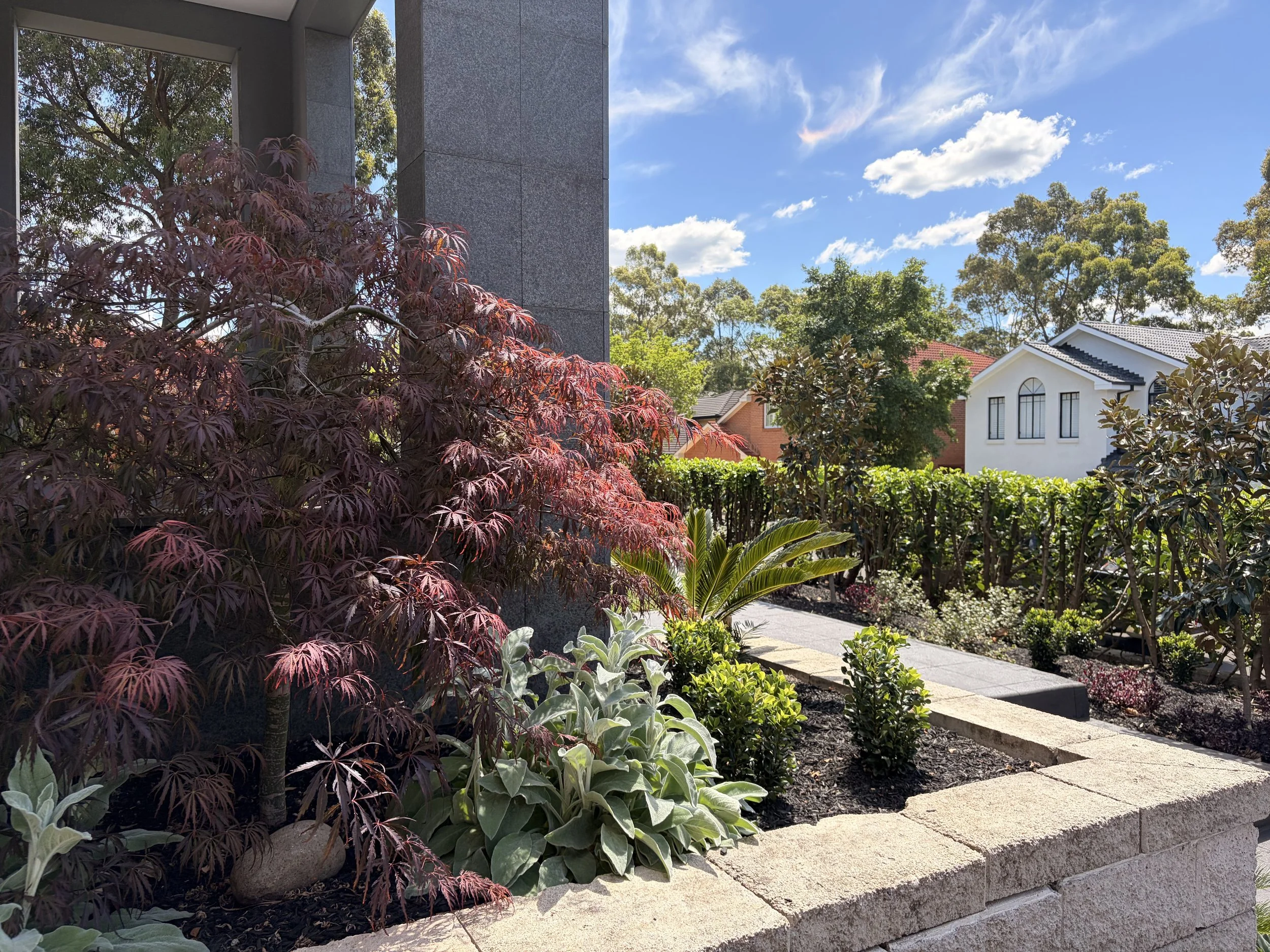
Most gardens fail not because of bad taste or insufficient budget, but because the design process starts in the wrong place. A garden that looks impressive on installation day but struggles through its second Sydney summer is a common outcome when aesthetics take precedence over horticulture.
The best backyard landscaping ideas solve a site problem first: what the soil is doing, how water moves across the block after rain, and what winds those plants will face long-term. A Paddington terrace and a beachside Coogee home may sit within the same city, but their soil, exposure, space and architecture demand very different designs. The strongest ideas are those shaped around these site-specific conditions.
The five ideas below explore practical backyard garden ideas in Australia that suit Sydney’s soils, microclimates and urban conditions.
Key Takeaways
Site analysis, including soil type, drainage, sun exposure and wind, must inform every design decision before aesthetics
Sydney's coastal and inner suburbs have microclimate constraints that rule out many internationally popular plant choices
Modern landscaping ideas and backyard garden designs that hold their quality long-term are always climate-specific, not trend-driven
Mass planting from a restrained palette generally creates a more coherent garden and simplifies ongoing care
The most coherent properties treat front and back as one connected design composition
1. Native-Led Garden with Contemporary Structure
Clean horizontal layers, generous mass planting in a restrained palette, and structural contrast between upright grasses, clipped shrubs, and a single canopy specimen. Gravel mulch or decomposed granite holds the composition together.
The aesthetic is calm and intentional, and it improves with maturity rather than requiring constant intervention.
Plants and Materials
Lomandra longifolia 'Tanika' as a border grass
Westringia fruticosa for a clipped mid-storey suited to coastal exposure, provided heavy clay is well prepared and drained
Banksia integrifolia for height and seasonal interest
Grevillea 'Coastal Gem' as a low-flowering layer
Decomposed granite, sandstone chip, or river pebble mulch; sandstone or steel edging
Where It Works Best
Randwick, Coogee, Bronte, Freshwater, Hunters Hill. Particularly well suited to exposed coastal blocks where salt-laden winds and shallow soils make non-native species a persistent maintenance burden.
Maintenance Level
Low. Westringia benefits from regular light tip pruning monthly to maintain its shape and prevent it from becoming leggy or woody. Unlike many shrubs, it does not respond well to hard pruning, so little and often is the right approach. Lomandra can be cut back hard every two to three years to refresh its form.
2. Dry-Tolerant Garden with Succulents and Mediterranean Perennials
This style suits sunny, heat-reflective spaces with free-draining soil, including raised beds, narrow side passages and areas beside north-facing walls. Rosettes, silver foliage, and seasonal flower spikes create contrast over a ground layer of gravel or river pebbles.
Good drainage is essential. Succulents may tolerate dry conditions, but they can decline quickly where water sits around their roots after heavy rain.
Plants and Materials
Agave attenuata, Echeveria species
Senecio mandraliscae (blue chalk fingers)
Stachys byzantina (lamb’s ears)
Lavandula dentata for soft seasonal texture
A compact, non-invasive ornamental grass as an edging layer
Aloidendron barberae (tree aloe), Olea europaea (Mediterranean olive), Corymbia ficifolia 'Dwarf Orange' or Eucalyptus 'Baby Blue' as a feature specimen
Crushed sandstone, river pebble or fine gravel and dry-stack stone or Corten steel edging
Where It Works Best
Paddington, Double Bay, Woollahra, Surry Hills. Particularly effective where terrace beds accumulate heat and where low-maintenance landscaping is a practical priority.
Maintenance Level
Very low. Annual tidying of spent flower spikes and occasional removal of dead outer leaves. If a dwarf tree specimen is included, yearly pruning may be needed to manage height or spread. These gardens need relatively little intervention once established.
3. Tropical Minimalism for Pool and Harbourside Gardens
Sydney’s warm summers and mild winters can support tropical-style backyard landscaping ideas in sheltered gardens with good drainage. One or two structural palms, bold foliage and pale paving create a calm, resort-like feel.
Kentia palms provide elegant height in filtered light or sheltered sun, while giant bird of paradise needs brighter conditions and more room to grow.
Plants and Materials
Howea forsteriana (Kentia palm)
Strelitzia reginae (bird of paradise) or Cyathea cooperi (Australian coin spot tree fern) for height
Philodendron xanadu as a low border layer
Bromeliads as a groundcover alternative where light is limited beneath the canopy
Trachelospermum jasminoides (star jasmine) on a boundary fence
Bluestone, limestone, or sandstone paving
Hardwood or powder-coated aluminium screening
Where It Works Best
Mosman, Hunters Hill, Kirribilli, Double Bay and Vaucluse. Best in sheltered pool or harbourside gardens with reliable drainage, adequate soil depth and light conditions matched to each species.
Maintenance Level
Moderate. Palms require occasional removal of spent fronds. Philodendron benefits from seasonal tidying. Star jasmine needs a clip once or twice a year.
4. Structured Formal Garden with Hedging
Formal gardens suit heritage terraces, Californian bungalows and prestige homes with symmetrical architecture. Clipped hedges, strong sight lines and a restrained planting palette create structure, while gravel, decomposed granite or sandstone edging reinforces the geometry.
The appearance may be controlled, but the planting still depends on good horticultural preparation. Hedges perform best where the soil is improved before planting, irrigation reaches the full root zone, and there is enough access around the beds for regular clipping.
Plants and Materials
Buxus microphylla var. japonica, Loropetalum chinense, Camellia spp. or Murraya paniculata for hedging
Magnolia 'Little Gem' or Lagerstroemia indica as a standard canopy
Dressed sandstone edging
Decomposed granite pathways, or steppers with Ophiopogon japonicus 'Nana' inter-planted between them
Where It Works Best
Paddington, Woollahra, Hunters Hill, Mosman, and Kirribilli. Properties with formal architectural detailing, intact heritage fencing, or symmetrical facades where design coherence extends from the street into the rear garden.
Maintenance Level
High. Hedges require regular shaping, typically three to four times per year. This is a garden that rewards consistent professional horticultural care.
5. Lawn-Free Contemporary Backyard
For smaller inner-city blocks, backyard landscaping ideas that remove turf can reduce mowing, irrigation demand and ongoing maintenance while making better use of limited space. Large-format pavers with planted joints, gravel bays, mass-planted groundcovers and one well-positioned shade tree create a clean, contemporary composition.
Removing lawn doesn't mean losing softness. Integrated garden beds, groundcover plantings, and permeable surfaces such as gravel or mulched paths preserve the organic feel while reducing maintenance. Heavy use of non-permeable hard surfacing can cause water runoff, waterlogging, and elevated yard temperatures, and many councils are now enforcing higher permeable-to-non-permeable ratios on new builds, so getting this balance right at the design stage is important.
Without a lawn, the planting becomes the main visual feature, so the design depends on species that maintain coverage and structure without regularly outgrowing the space.
Plants and Materials
Lomandra spp. or Dianella as an upright grass layer; rounded clipped shrubs for structure; for light to medium foot traffic, Australian native Dichondra repens or Ophiopogon japonicus 'Nana' as a low-growing lawn substitute
For areas with no direct foot traffic, Casuarina 'Cousin It' makes an interesting groundcover effect when layered with flowing grasses and clipped shrubs
Agave attenuata for sculptural accent
Acer palmatum (Japanese maple), Lagerstroemia indica (crepe myrtle), ornamental Malus spp. (ornamental apple) or Prunus spp. (ornamental cherry) for a canopy with seasonal colour and interest
Lagerstroemia indica for deciduous seasonal colour
River pebble, decomposed granite, or brushed concrete, or permeable paving; mulch where planting beds allow
Where It Works Best
Areas like Surry Hills, Bondi, Newtown, Glebe, Coogee. Renovated terraces and courtyard gardens where lawn is neither practical nor proportionate to the space.
Maintenance Level
Low. A well-designed lawn-free backyard garden design requires considerably less time than a comparable turf area, with no mowing and significantly reduced irrigation management.
The Idea Is a Starting Point, Not a Solution
These five styles are useful starting points, but none should be applied to a property unchanged. Soil depth, drainage, exposure, available space, and how you use the garden determine which elements will perform well in the long term.
At Succulent Designs Sydney, landscape design, installation and ongoing horticultural care are treated as one connected process. Each garden is planned around the property’s soil, drainage, microclimate, architecture and practical use, so the planting remains coherent and healthy as it matures.
Working with a horticultural consultant can help you understand the site before committing to a design direction. Where the street-facing garden is also part of the project, our guide to front yard landscaping ideas explains how planting, access and architecture can work together across the whole property.
Get in touch with the team to discuss your site and what would suit it.