
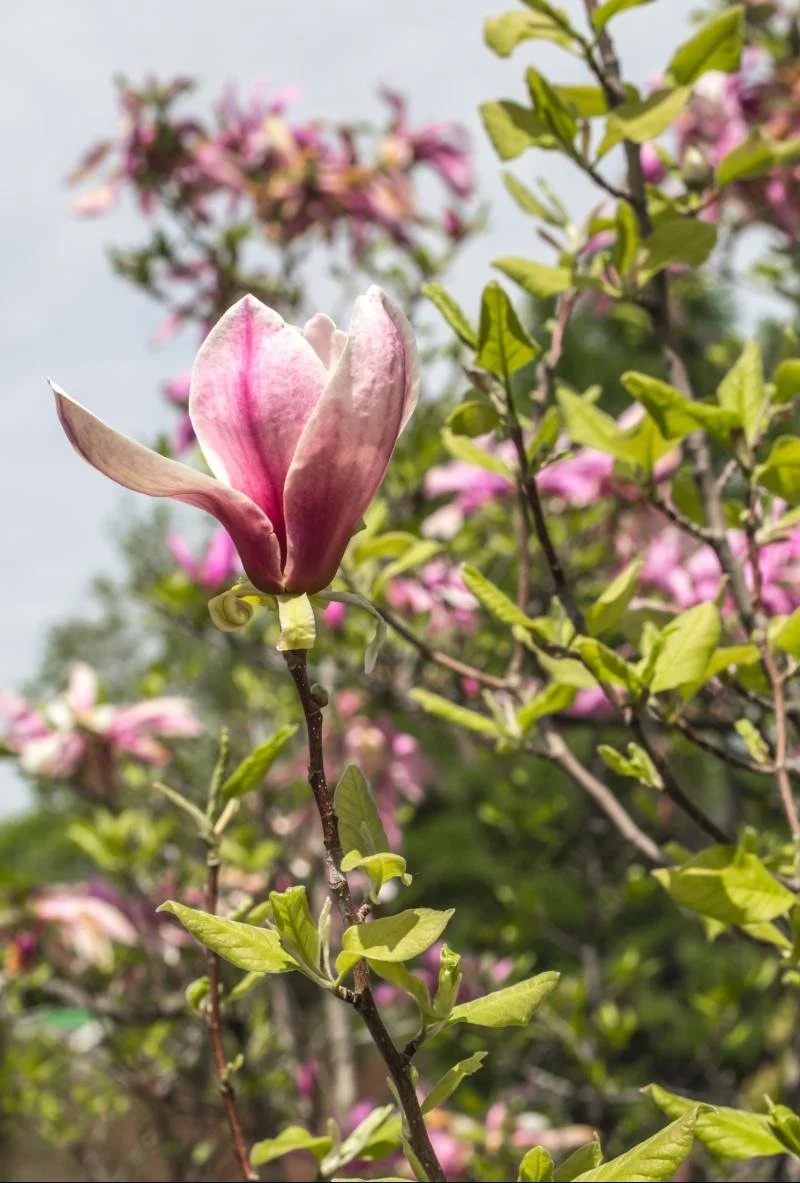
Magnolia Growing gUIDE
Of the Southern Magnolia cultivars available for Sydney gardens, ‘Little Gem’ is the one we recommend most consistently — and the reason is straightforward: its size is appropriate for the gardens we actually work in. The larger ‘Teddy Bear’ cultivar is a beautiful tree, but at 4–5 metres in Sydney conditions it outgrows many residential spaces and requires more active management to stay proportionate. ‘Little Gem’ reaches 3–4 metres and holds a naturally upright, compact habit that suits the scale of Eastern Suburbs and North Shore residential gardens without becoming a maintenance problem.
We installed a Magnolia ‘Little Gem’ as the hero specimen in our Centennial Park front garden — a single tree positioned to anchor the whole composition against a Federation streetscape. The glossy deep-green foliage with bronze-russet undersides and large white flowers achieved exactly the considered, premium result the property needed.
Keeping a magnolia HEALTHY
Magnolia is pH-sensitive and this is the most important thing to know before planting in Sydney. In alkaline soils, iron chlorosis develops — yellowing foliage, particularly between the leaf veins, indicating the plant cannot access iron despite it being present in the soil.
Quick Facts
| Botanical name | Magnolia grandiflora ‘Little Gem’ |
|---|---|
| Common name | Little Gem Magnolia |
| Plant family | Magnoliaceae |
| Plant type | Evergreen feature tree |
| Mature size | 3–4m H × 1.5–2m W in Sydney conditions |
| Aspect | Full sun to part shade |
| Flowers | White, large and fragrant, spring–summer (intermittent year-round) |
| Origin | USA (cultivar of Southern Magnolia) |
| Best planting time | Autumn–winter |
| Maintenance level | Low–Medium |
| Sydney suitability | Eastern Suburbs ✓ | Inner West ✓ | North Shore ✓ | Coastal exposed ~ |
Keeping a magnolia HEALTHY
Magnolia is pH-sensitive and this is the most important thing to know before planting in Sydney. In alkaline soils, iron chlorosis develops — yellowing foliage, particularly between the leaf veins, indicating the plant cannot access iron despite it being present in the soil.
Landscape Uses and Style
‘Little Gem’ is primarily a specimen tree — it performs best when given space to be the focal point rather than lost in a mass planting. We use it as a front garden entry feature, a courtyard centrepiece, a driveway specimen in pairs, and planted in rows along boundaries for a formal avenue effect.
It can be used as a hedging or screening plant, but requires consistent pruning to stay dense. In poor or depleted soil, a ‘Little Gem’ hedge will develop gaps and thin sections that are slow to recover. Healthy soil is the prerequisite for hedging use. The large white flowers make it a natural fit for Hamptons, formal, and contemporary garden styles. The white flower palette, glossy foliage, and upright habit work particularly well with white render, limestone, and bluestone paving.
Companion Plants
Tricolour Star Jasmine works beautifully as an underplanting beneath ‘Little Gem’ — as demonstrated in the Centennial Park project, where the variegated cream, green, and pink foliage lightened a shaded bed beneath the magnolia canopy. Lilly Pilly ‘Resilience’ as a background hedge complements the magnolia’s feature role. Westringia ‘Grey Box’ as a low foreground hedge ties the composition together at ground level.
Growing Conditions
Full sun to part shade — flowers most freely in sun. Prefers slightly acidic, well-drained soil with good organic content. pH range of 5.5–6.5 is ideal; above 7.0 expect iron chlorosis. Tolerates Sydney’s range of soil types when pH is appropriate. Avoid poorly draining positions. Moderately drought tolerant once established but performs better with regular deep watering. Not a first choice for exposed coastal positions — the large leaves are vulnerable to salt scorch and wind damage.
Leaves, Flowers, Fruit
Evergreen. Leaves large, oval, 8–15cm, glossy deep green on the upper surface with distinctive bronze-russet felted undersides — one of the most recognisable foliage characteristics in Sydney gardens. Flowers are large (to 20cm), white, and fragrant, appearing from spring through summer with occasional repeat flowering. Cone-like fruit follows flowering, containing red seeds — ornamentally interesting, not a garden problem.
Maintenance
Water deeply and regularly during the first two years — magnolia has a fleshy root system that establishes slowly and resents drying out. Feed with an acidic slow-release fertiliser (formulated for camellias and azaleas) in spring. As a specimen tree, minimal pruning is required — remove crossing or inward-growing branches in late winter. As a hedge, clip after the main flowering period to maintain density.
Potential Problems
Iron chlorosis Yellowing leaves with green veins, particularly on new growth, indicates iron deficiency caused by alkaline soil preventing iron uptake. Test soil pH — if above 6.5, apply sulphur to lower it and treat the plant with chelated iron as a corrective. This is the most common magnolia problem in Sydney and almost always a soil issue rather than a fertiliser issue.
Thin hedging ‘Little Gem’ used as a hedge will develop gaps and thin sections in depleted soil. Soil testing and improvement is the solution — not more frequent watering.
Root disturbance Waterlogged soil causes yellowing, dieback, and poor growth. Ensure beds are free-draining before planting.
Seen in Our Work
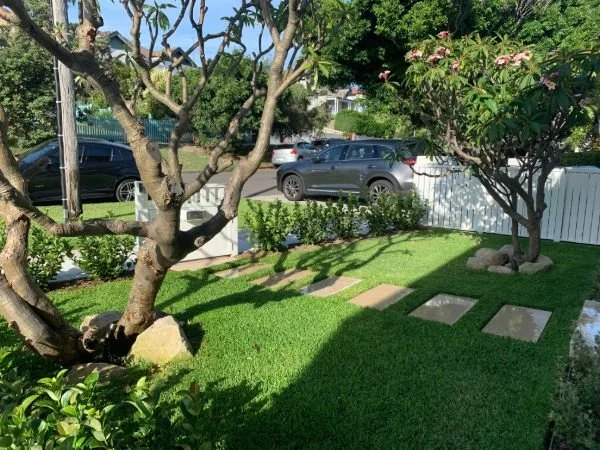
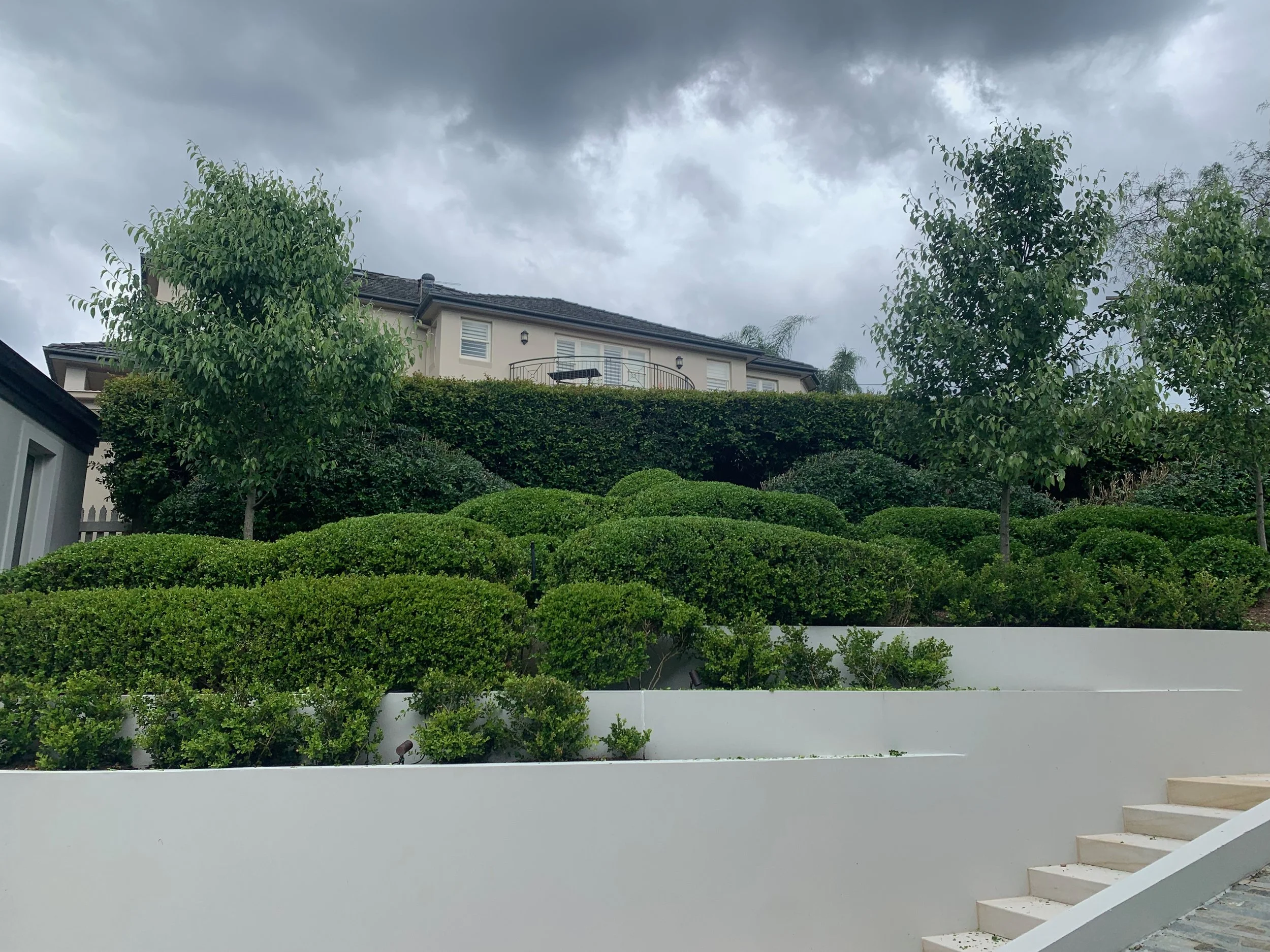
We specified Magnolia ‘Little Gem’ as the hero specimen in our Centennial Park front garden installation — planted as a single feature tree with Tricolour Star Jasmine as underplanting. The project demonstrates how a single well-positioned magnolia can anchor an entire front garden composition in a heritage streetscape context.
Wherever your garden is, we bring the same precision, knowledge, and design-led care.
FAQS
What is the difference between Magnolia ‘Little Gem’ and ‘Teddy Bear’?
Both are compact cultivars of Magnolia grandiflora suited to residential gardens, but ‘Little Gem’ is our preferred recommendation for Sydney. It reaches 3–4 metres in Sydney conditions with a naturally compact, upright habit that suits most residential spaces. ‘Teddy Bear’ is larger — typically 4–5 metres — with a fuller canopy. For most Sydney residential projects, ‘Little Gem’ is the more appropriate choice.
Why are my Magnolia leaves going yellow?
Yellowing leaves with visible green veins — particularly on younger growth — is almost always iron chlorosis caused by alkaline soil. Test soil pH, apply sulphur to lower it if needed, and treat the plant with chelated iron. Avoid the mistake of simply applying more fertiliser — the problem is pH, not nutrition.
Can Magnolia ‘Little Gem’ be used as a hedge?
Yes, but it requires consistent management and good soil. In healthy, well-prepared soil it performs well in a hedging role. In poor or depleted soil, it will develop gaps and thin sections that are difficult to recover. Soil preparation before planting and ongoing fertilising are more important for magnolia hedging than for most other species.
Can I grow Magnolia ‘Little Gem’ in a pot?
Yes — ‘Little Gem’ is one of the better magnolia varieties for large containers. Use a pot of at least 60cm diameter, quality acidic potting mix (formulated for camellias and azaleas), and water consistently. A potted ‘Little Gem’ is an excellent option for terraces, balconies, and courtyard entries where ground planting isn’t possible.