PROJECTS
BOTANY — COMMERCIAL NATIVE GARDEN
About The Project:
THE BRIEF:
Jim had recently completed a significant renovation of his automotive centre on Bay Street — fresh render, new glazing, polished concrete. The grounds were not. Front garden beds were a mix of bare compacted soil, dead and overgrown weedy grasses, concrete rubble, and broken sleepers. There was no planting of value, and nothing to signal a well-maintained commercial property.
The brief was clear: clean it up, green it up, and make it low maintenance.
THE CHALLENGE — BOTANY SANDS:
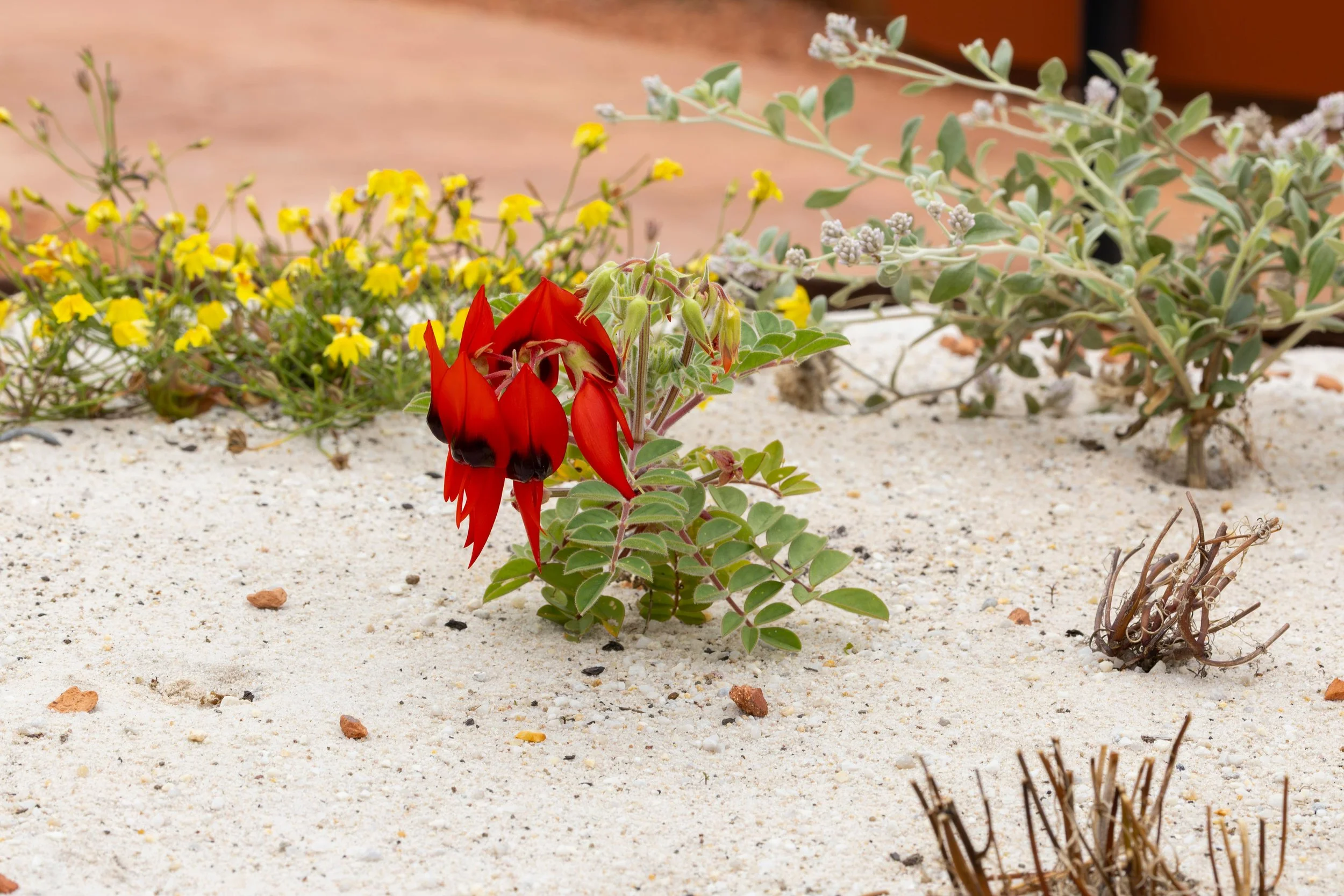
Botany sits on an ancient dunefield — deep, highly porous quartz sand with almost no water retention and very low nutrients. On a commercial site that had also seen years of vehicle traffic and compaction, the starting conditions were as challenging as they come. Any plant selection that ignored this reality would struggle within a season. The design required plants that could genuinely thrive without intensive care in a setting where nobody would be hand-watering daily.
WHAT WE DELIVERED:
CLEARING AND BUILDING THE RAISED BEDS:
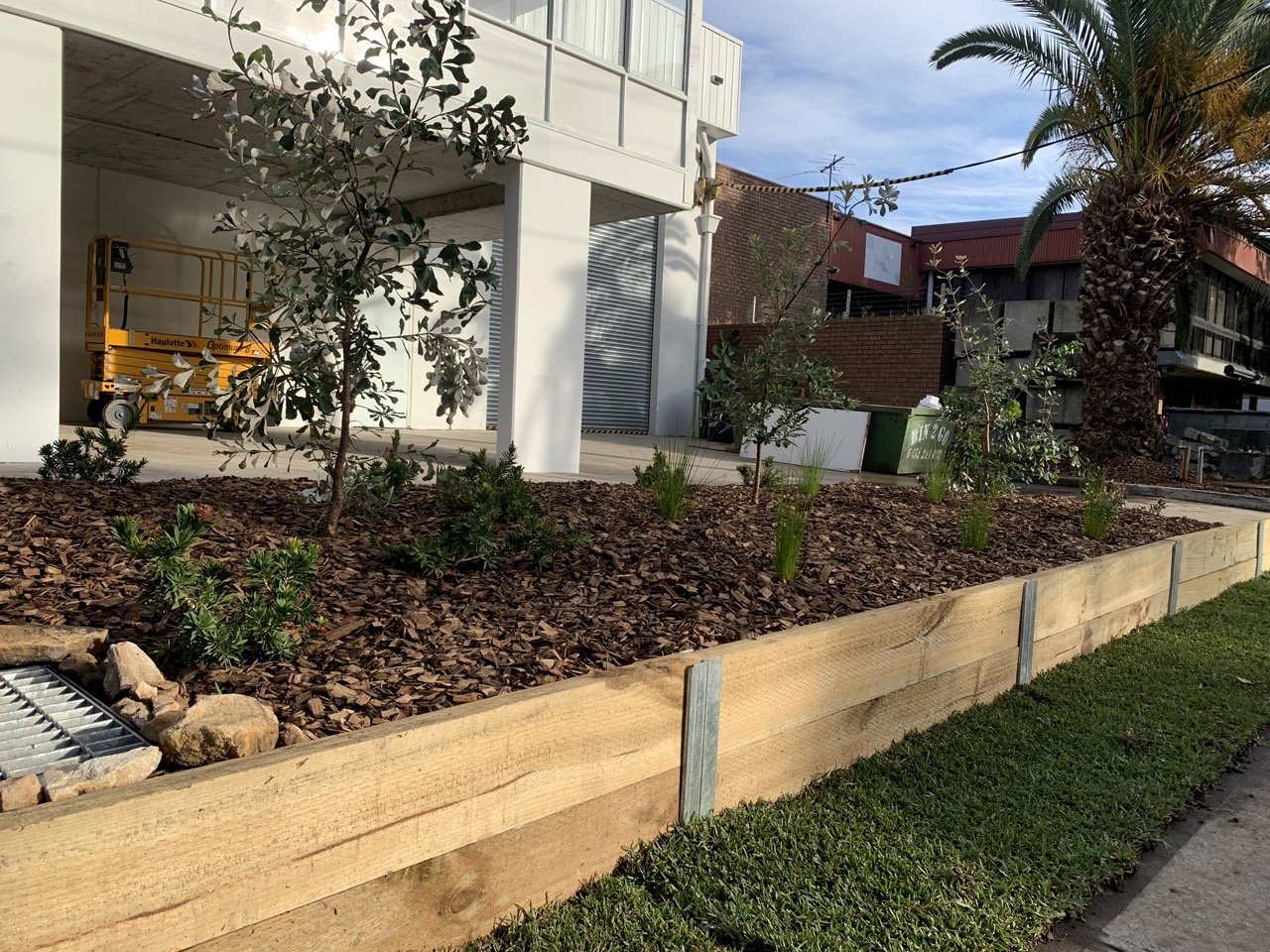
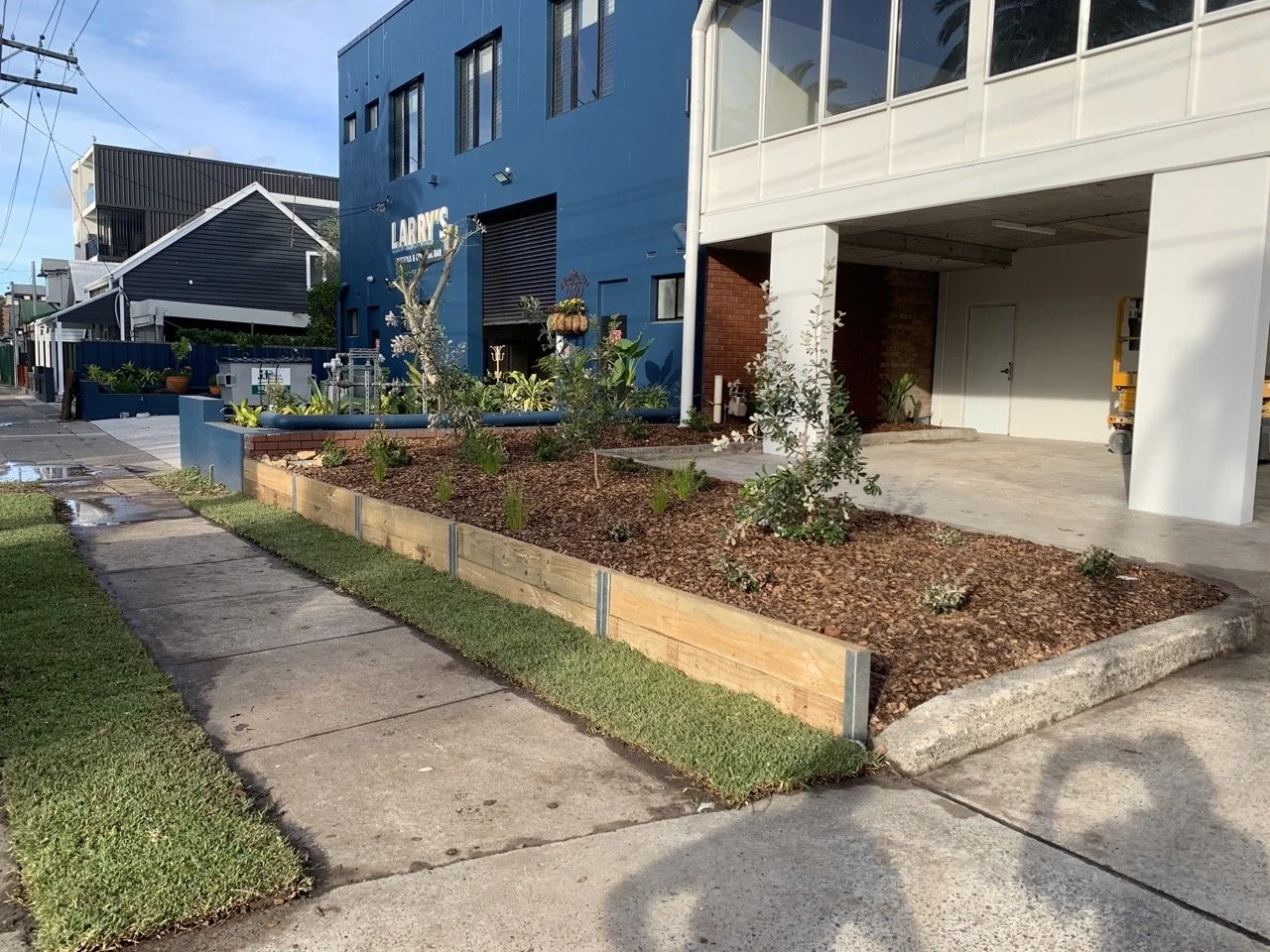
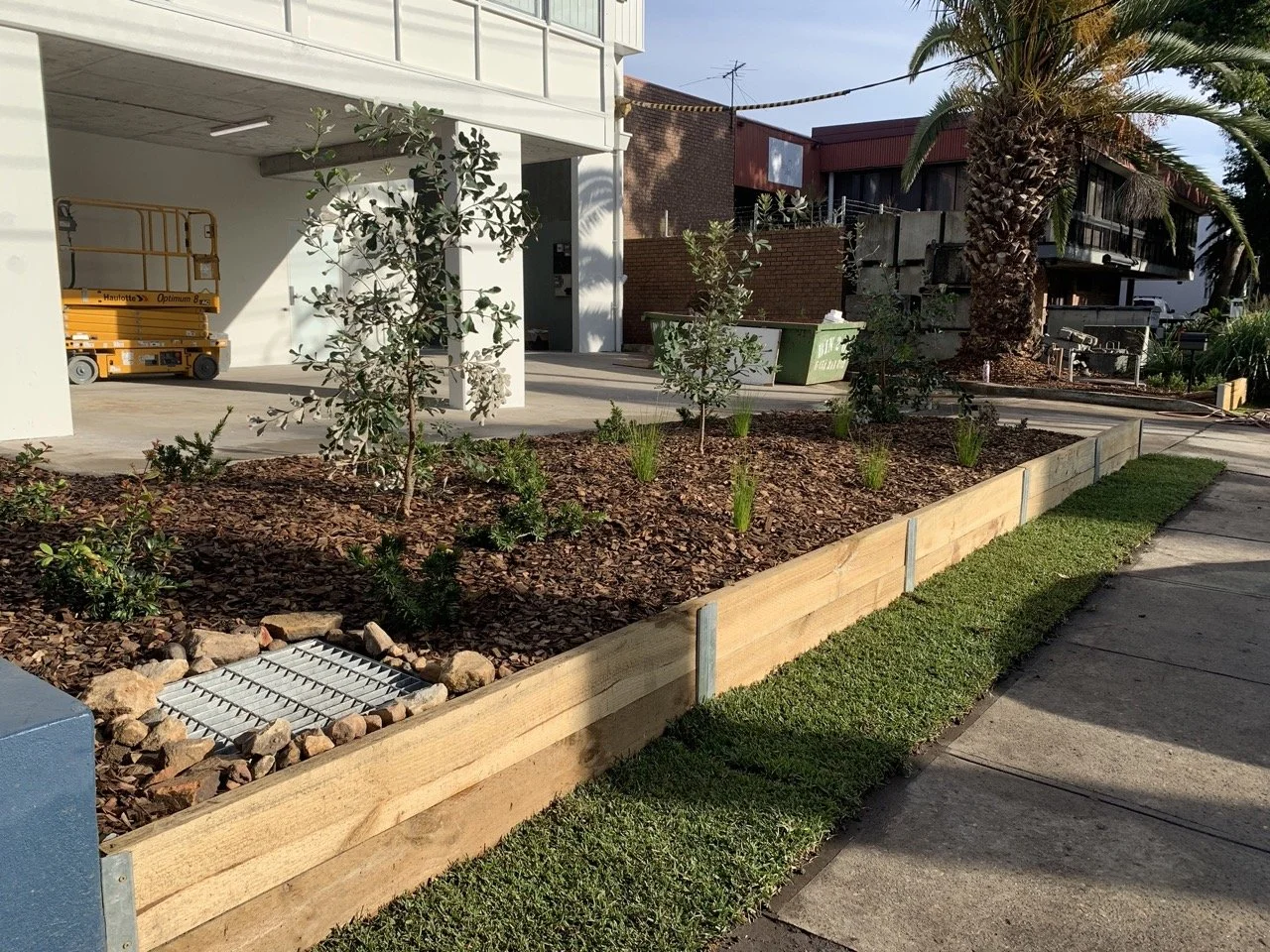
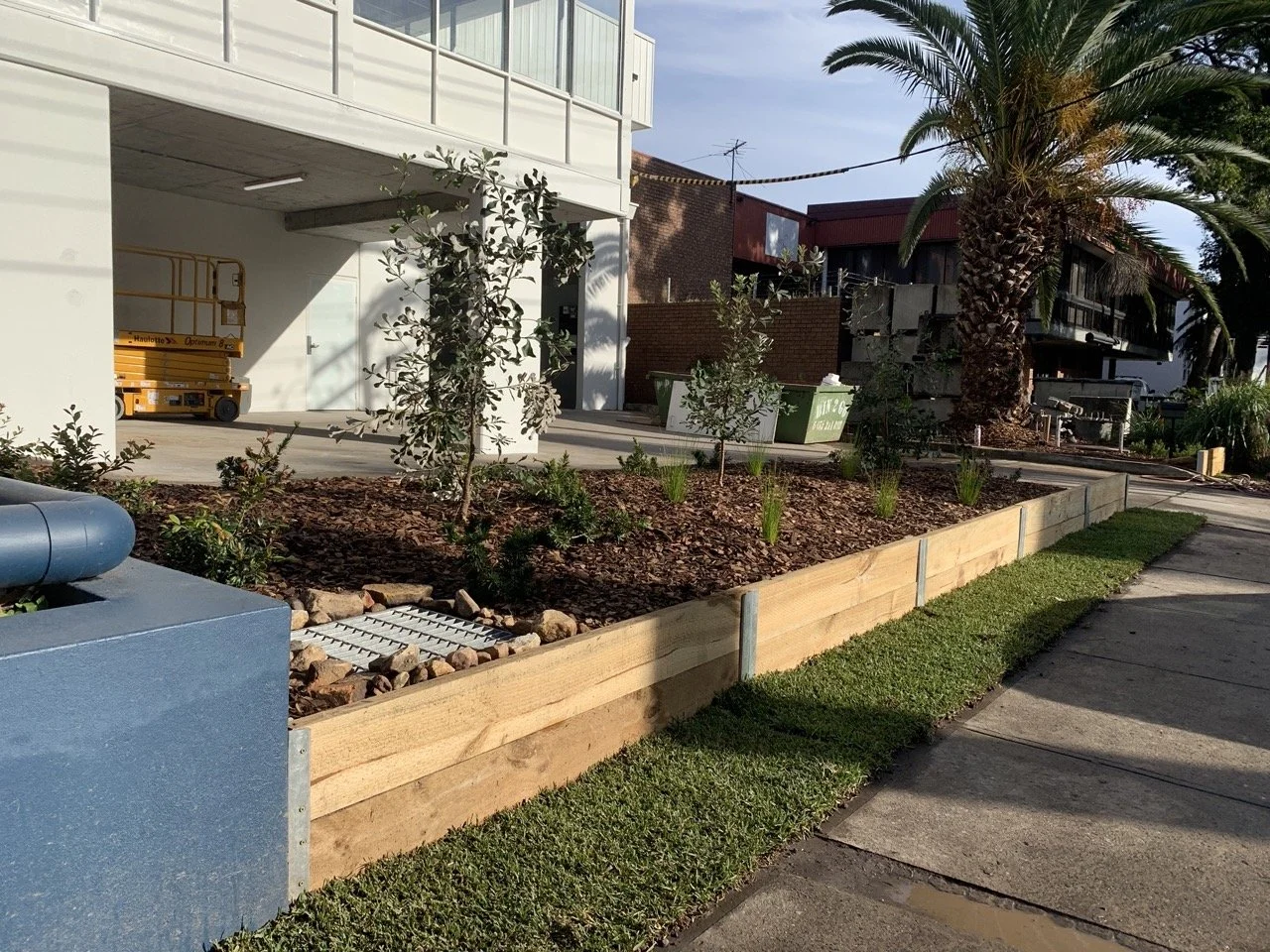
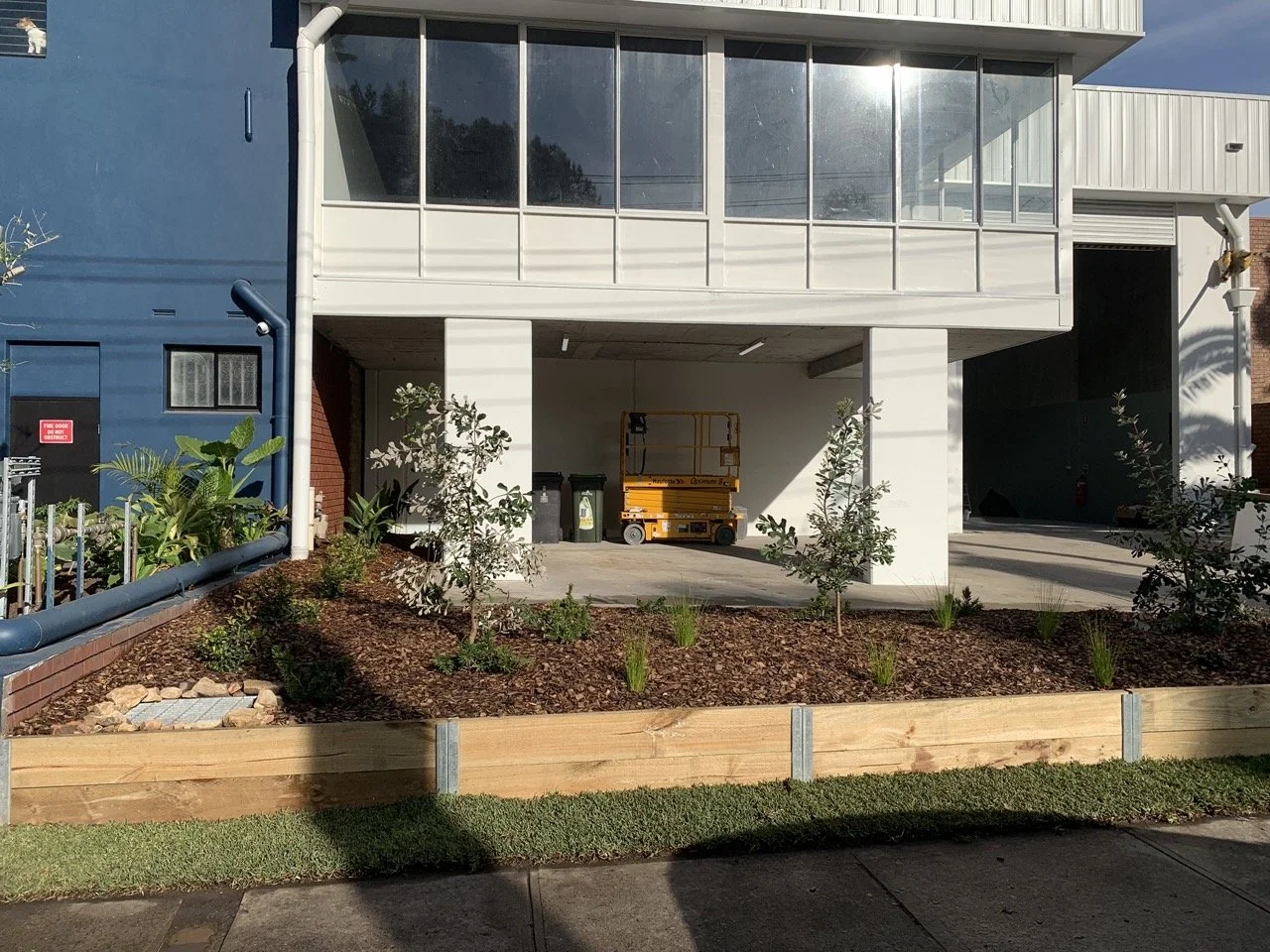
All existing vegetation and debris were removed by hand — overgrown clumping grasses, dead palm debris, concrete rubble and broken materials cleared from site. The raised garden bed frames were built from hardwood timber sleepers at two courses high (approximately 400mm), fixed with galvanised H-stirrup posts.
SOIL AND DRAINAGE:
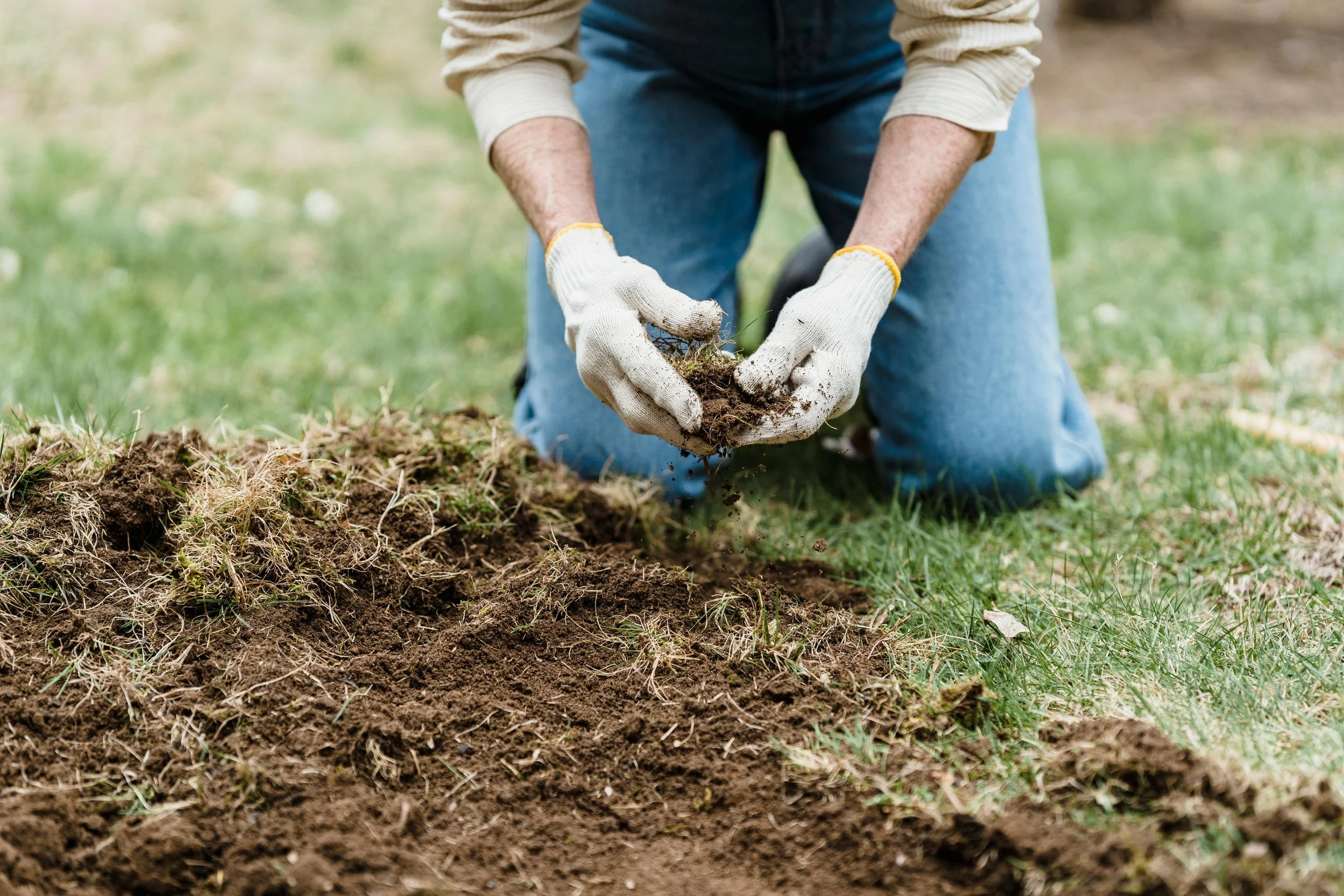
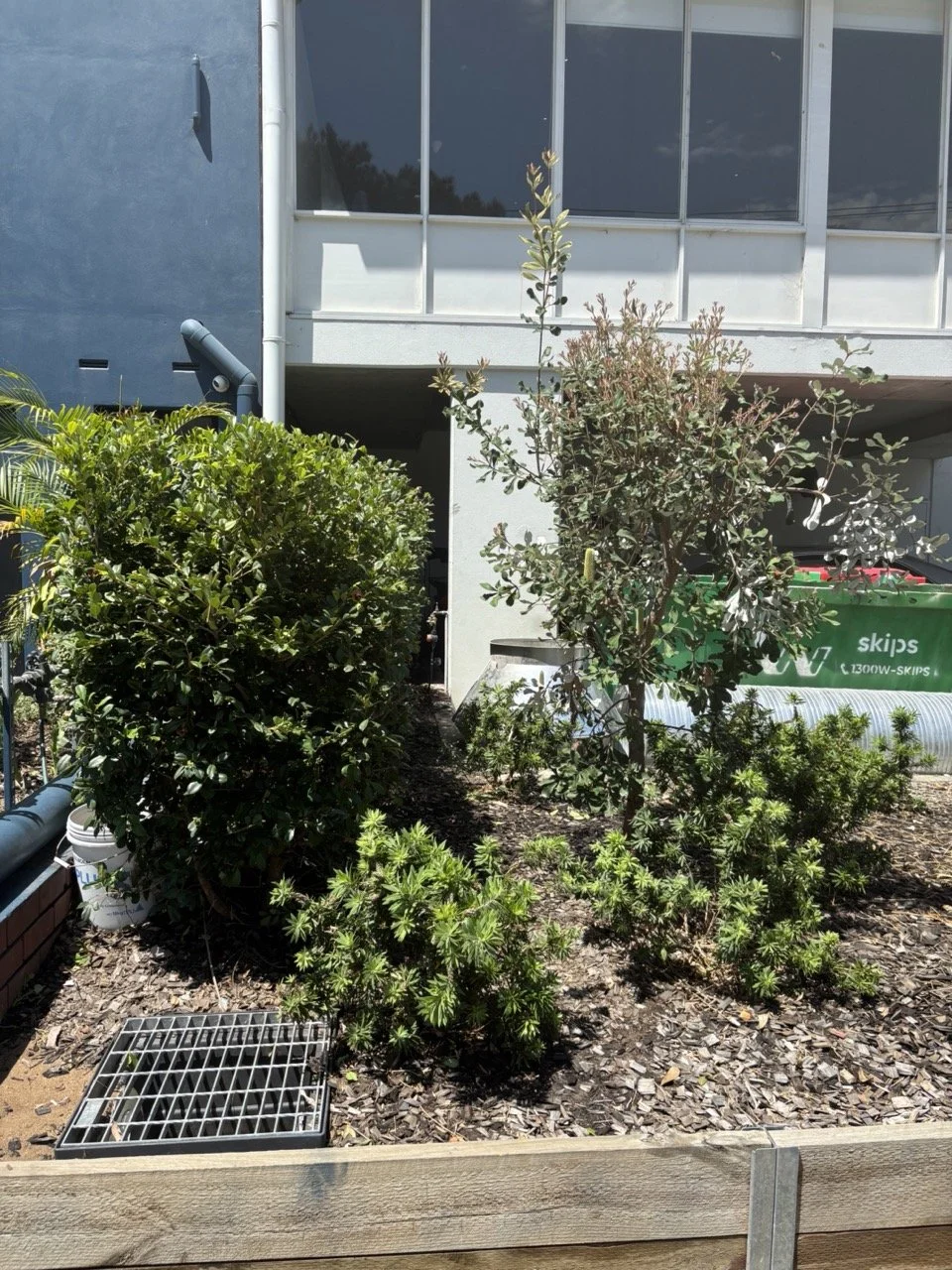
The beds were filled with the existing sandy soil amended with approximately one cubic metre of compost, mixed through to improve water retention and nutrient availability. Soil was graded to slope gently toward the internal kerb — ensuring drainage toward the stormwater infrastructure on site. The existing stormwater grate in the main bed could not be removed, so it was incorporated as a design feature: natural sandstone rocks placed around the galvanised grate, framing it as a drainage focal point within the bed.
IRRIGATION:
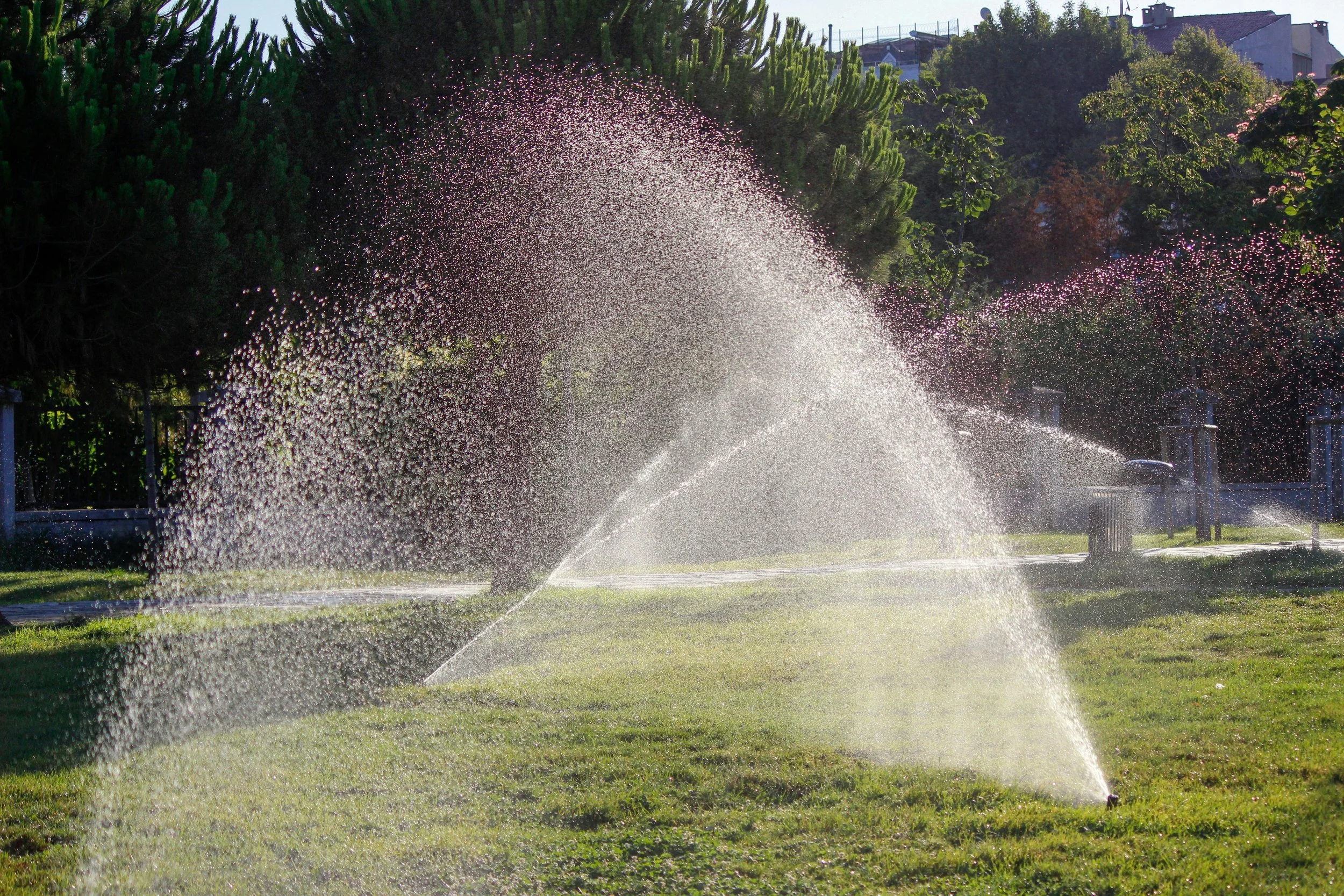
A drip irrigation system was installed with two manual dial timers — giving the building manager straightforward control over watering without specialist knowledge. On a commercial site, this is the difference between a garden that thrives and one that quietly fails over summer.
PLANTING — ALL-NATIVE PALETTE FOR THE BOTANY SANDS:
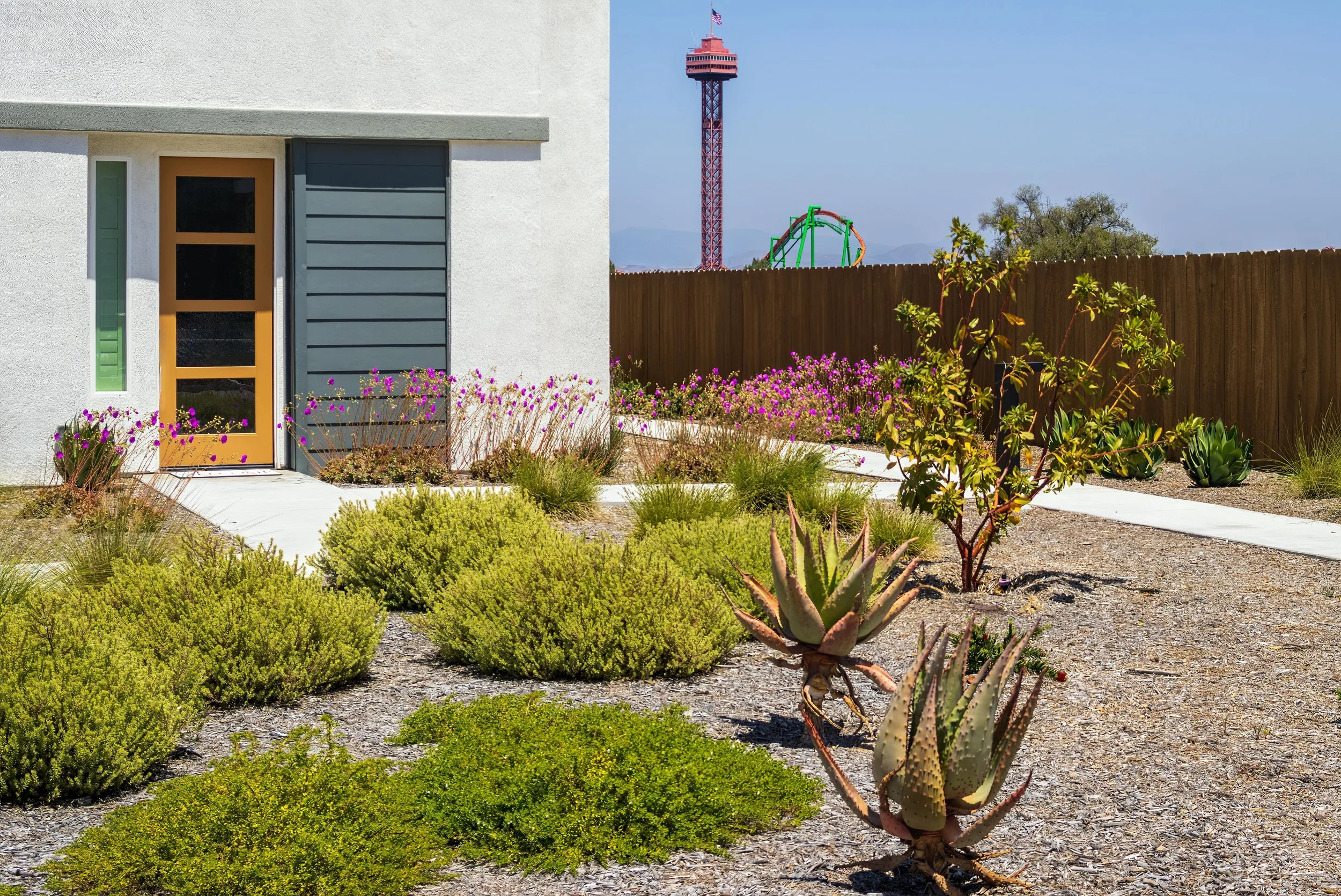
Every plant was selected for drought tolerance, low maintenance, and proven performance in deep sandy coastal soils. Most are Australian natives adapted to exactly this type of environment. 70 square metres of cypress woodchip mulch was laid throughout the beds to suppress weeds and retain moisture.
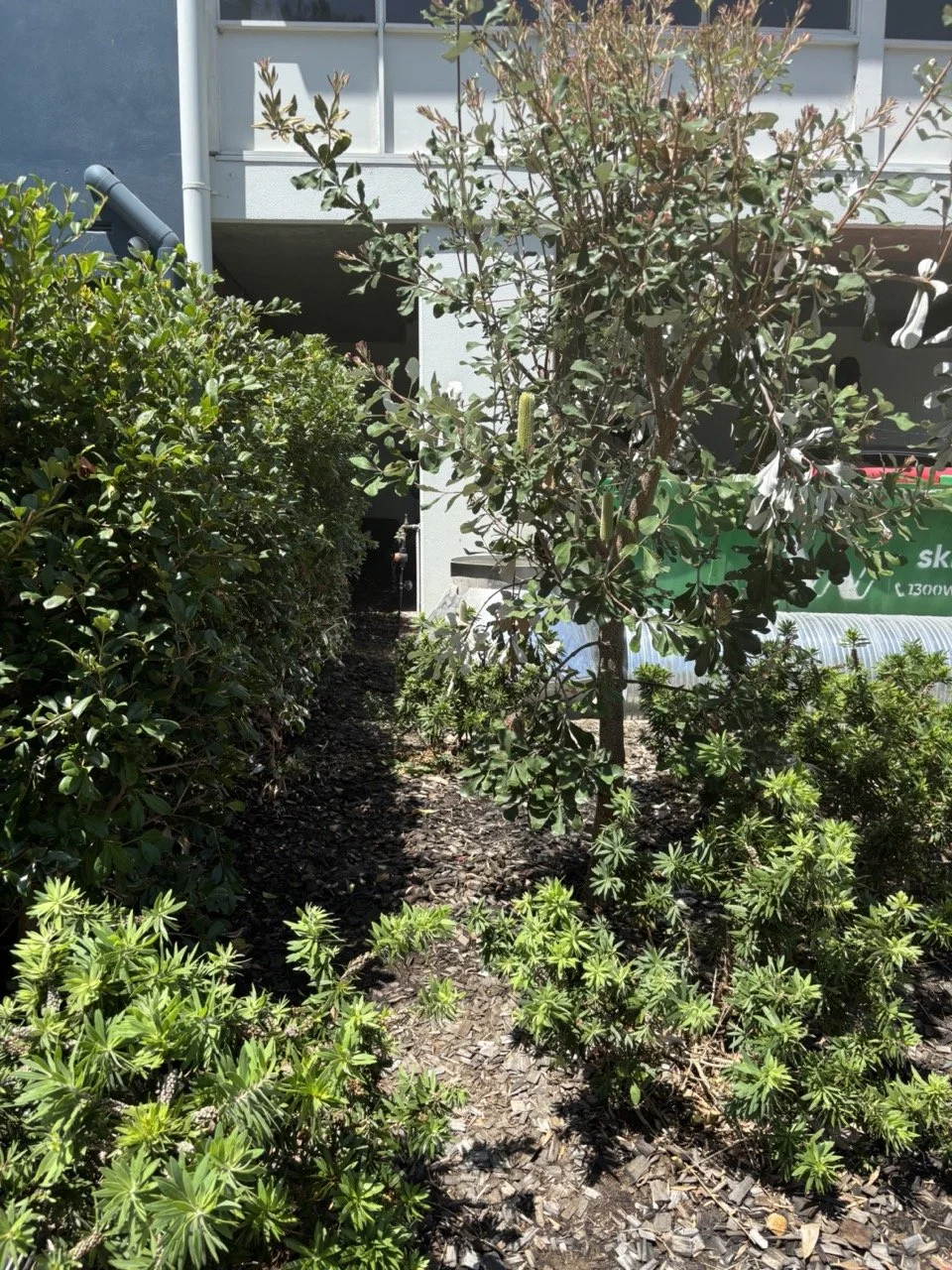
Banksia integrifolia (Coast Banksia) — the hero tree, native to coastal sandy soils, cylindrical yellow-orange flower spikes attract birds, will grow into statement canopy trees over time
Westringia fruticosa 'Blue Gem' (Coastal Rosemary) — native to coastal NSW, naturally adapted to sandy free-draining conditions
Elaeocarpus eumundi (Quondong) — feature tree with glossy dark foliage and clean vertical form
Callistemon 'Green John' (Compact Bottlebrush) — low water, low maintenance, red flower spikes through warmer months
Lomandra longifolia — virtually indestructible native grass, tolerates drought, compaction, and neglect
Grevillea 'Robyn Gordon' — one of Australia's most proven flowering natives, orange-red spider flowers over an extended season
Syzygium australe 'Resilience' (Lilly Pilly) — dense screening shrub with copper-red new growth
Ficinia nodosa (Knobby Club-rush) — native sedge with upright architectural form, used around the drainage feature
Aspidistra elatior (Cast Iron Plant) — chosen for the undercover shaded wall bed, tolerates low light, poor soil, and minimal water
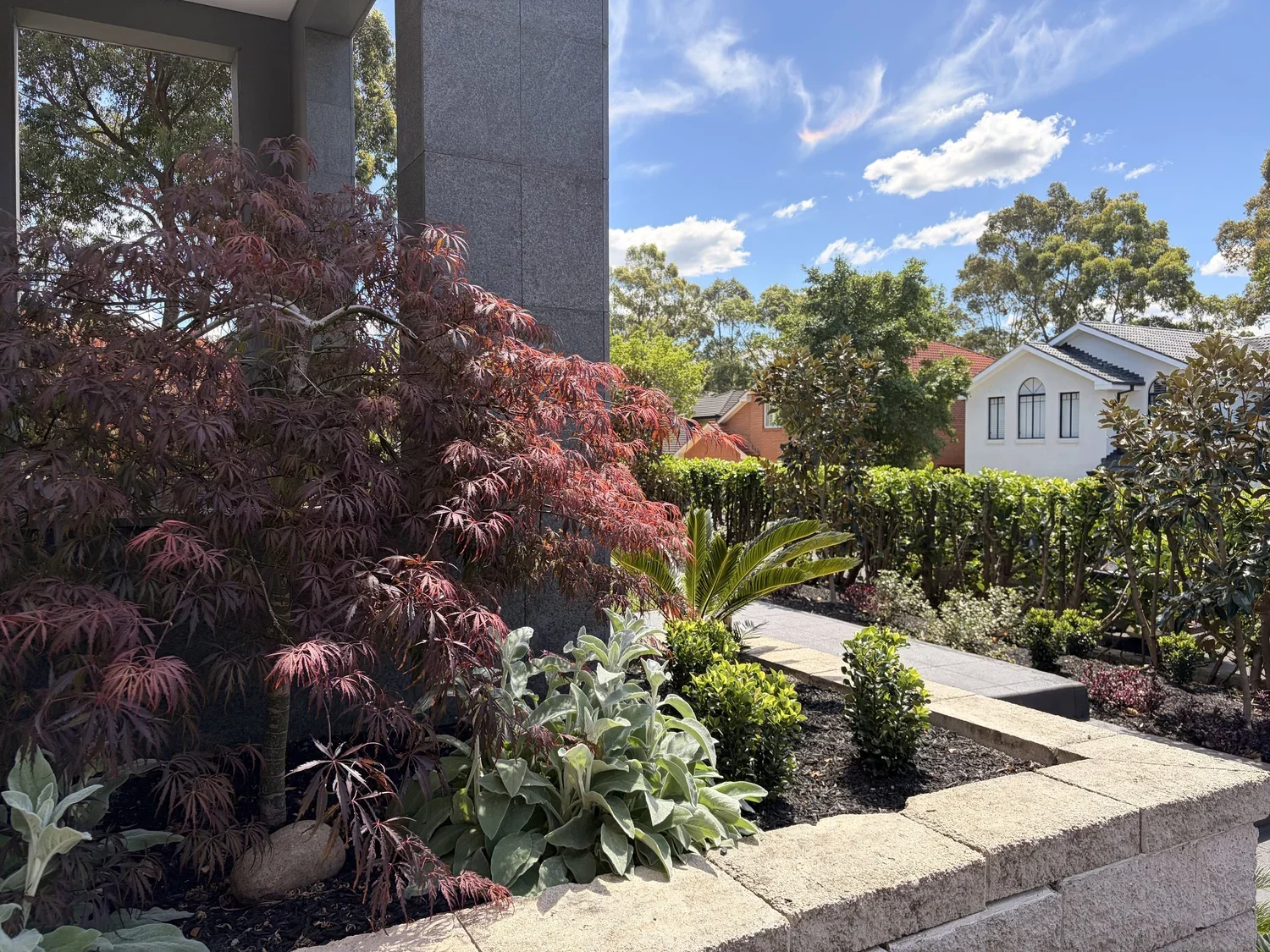
Three days of work transformed a neglected, rubble-strewn commercial frontage into a considered native garden that suits the building it belongs to. The hardwood timber raised beds give the property a clean contemporary edge. The all-native planting palette requires minimal water once established, and the drip irrigation system means the garden can be maintained consistently without specialist knowledge.
DISCOVER MORE