
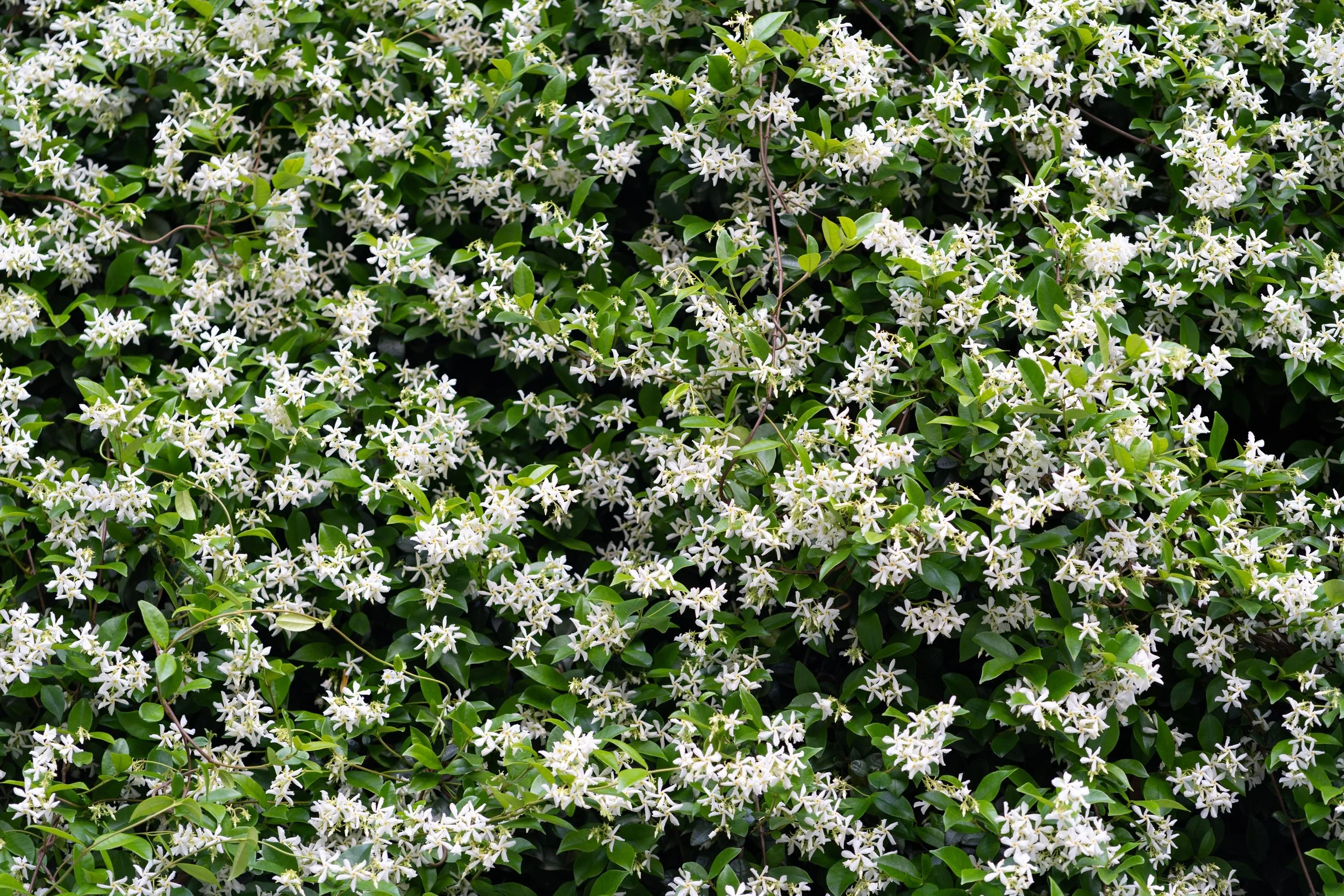
Star Jasmine Growing gUIDE
Star Jasmine is the plant we reach for more than any other across our service area. We have installed and maintained it from Randwick to Hunters Hill — across coastal sandy soils, sheltered sandstone courtyards, clay-heavy Paddington gardens, and north shore trellisinstallations — and it performs in all of them. There are very few Sydney sites where star jasmine will not establish and thrive.
tHE two sTAR jasmine forms and how they differ
The two forms behave quite differently in practice. The standard green variety (Trachelospermum jasminoides) is the stronger, faster climber — we use it on fences, boundary walls, and trellis structures where you need good coverage quickly. The Tricolour cultivar (T.jasminoides ‘Tricolour’) is slower-growing and better suited to groundcover use, where its more moderate spread is actually an advantage. Tricolour also brings something the standard form doesn’t: new growth flushes in white and pink before maturing to the characteristic dark green, adding a colour dimension that suits contemporary planting palettes.
The fragrance in spring is star jasmine’s most underrated asset. When it flowers in October and November, the scent carries across entire courtyards. We routinely position it near outdoor dining areas, entry gates, and bedroom windows for clients who want the garden to engage more than just the visual sense. The dark, glossy foliage provides one of the richest contrasts available in Sydney planting —deep green against light-coloured renders, limestone paving, or pale timber creates exactly the lush, layered look that premium gardens require.
Quick Facts
| Botanical name | Trachelospermum jasminoides |
|---|---|
| Common name | Star Jasmine (Chinese Star Jasmine) |
| Plant family | Apocynaceae |
| Plant type | Evergreen climbing vine / groundcover |
| Mature size | To 8m as climber; 200–300mm H as groundcover (spreading indefinitely) |
| Aspect | Full sun to full shade |
| Flowers | White, intensely fragrant, spring–summer (October–December) |
| Origin | China, Japan, Korea |
| Best planting time | Spring–autumn |
| Maintenance level | Low |
| Sydney suitability | Eastern Suburbs ✓ | Inner West ✓ | North Shore ✓ | Coastal exposed ✓ |
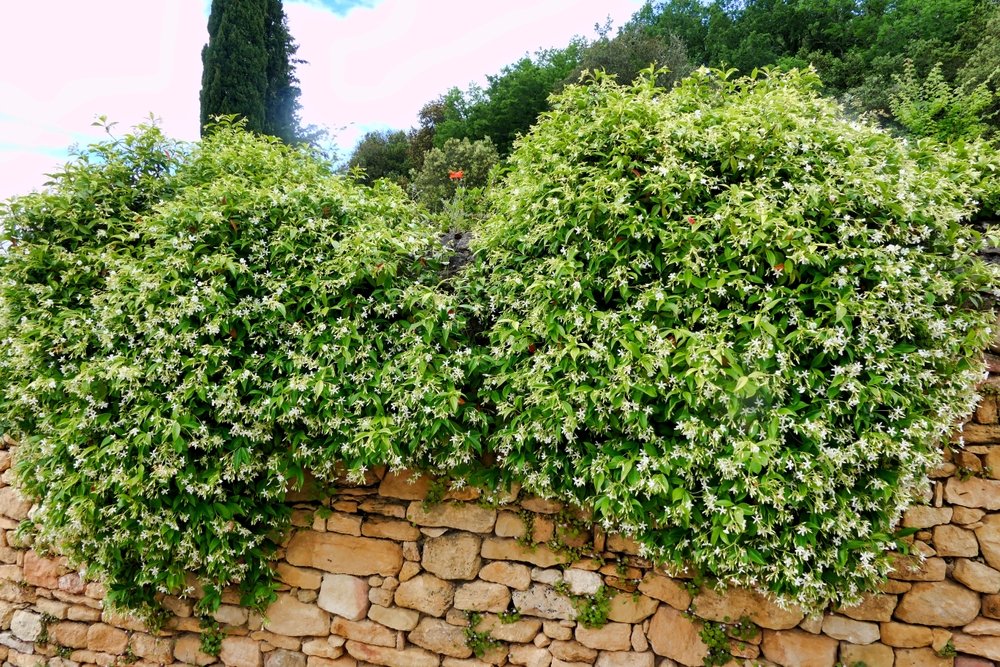
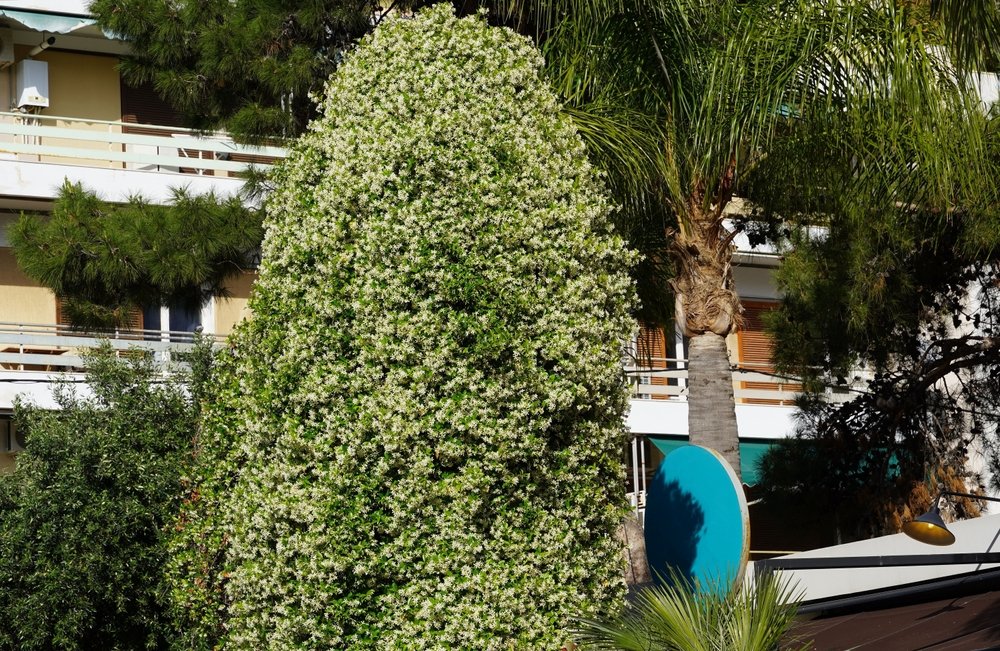
Star jasmine’s dual nature — climber or groundcover — makes it uniquely flexible for the kinds of small, detailed Sydney gardens we work in. As a climber on wire or trellis, it forms a dense, evergreen screen within two seasons and is the most effective way to green a bare boundary fence. As a groundcover, it weed-suppresses well, tolerates deep shade where lawn fails, and cascades attractively over retaining walls and raised planters. We have also trained it along pergola rafters for overhead fragrant cover and used it espalier-flat against walls in shaded courtyard positions.
Landscape Uses and Style
Companion Plants
Star Jasmine as a climber works well with Magnolia ‘Little Gem’ or Lilly Pilly ‘Resilience’ behind it — the jasmine covers the fence while the larger specimen provides structure above. As a groundcover, we pair it with Lomandra ‘Tanika’ at borders for a textural shift from fine strappy leaves to dense glossy mat, and with Westringia ‘Grey Box’ as the mid-level layer in native or contemporary schemes. In shaded gardens, combine with Aspidistra elatior for a deep-shade composition that requires almost nothing from the gardener once established.
Growing Conditions
Full sun to full shade — star jasmine is one of very few ornamental plants that genuinely performs across the complete light spectrum, which is why it works from south-facing Paddington courtyards to north-facing Hunters Hill trellises. It flowers most prolifically in sun or bright part shade but maintains healthy, dense foliage even in deep shade. Soil preference is broad. It handles the sandy, free-draining profiles of Randwick and the coastal eastern suburbs, as well as the heavier clay found in Paddington and inner west gardens. Drought-tolerant once established — typically after the second growing season. Growth rate is moderate in the first year as roots establish, then vigorous. In Sydney conditions, a climber will typically reach the top of a 1.8m fence panel within 18 months in a sunny position. Salt and wind tolerance is good — adequate for most Eastern Suburbs positions.
Leaves, Flowers, Fruit
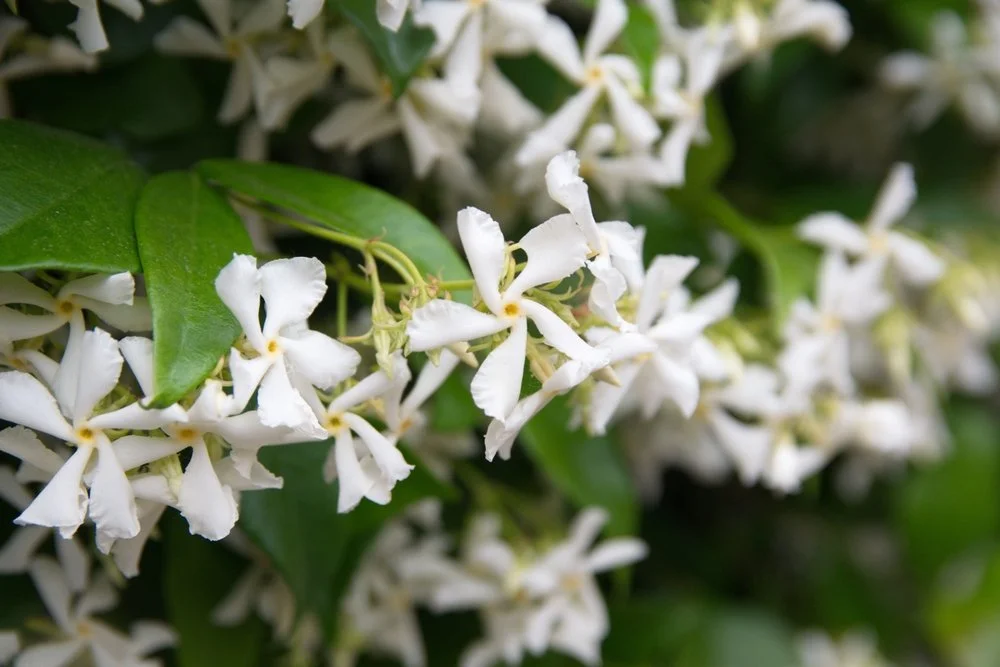
Evergreen. Oval leaves 3–6cm long, glossy dark green, borne on twining stems. In cold winters the foliage can flush bronze-red. Flowers are small, white, five-petalled stars appearing in dense clusters from October through December — intensely fragrant, one of the most recognisable scents in Sydney’s residential gardens. No ornamentally significant fruit. The stems produce a milky sap when cut — mildly toxic if ingested, mildly irritating to sensitive skin. Tricolour: same growth habit but slower, with new growth flushing pink and white before maturing to dark green.
Maintenance
Water regularly during the first two growing seasons. Once established, reduce to watering during extended dry periods only. As a climber, guide young stems onto wire supports early and trim wayward growth once or twice a year after flowering. As a groundcover, trim the leading edge to maintain boundaries — left unchecked it will spread indefinitely. Feed with a balanced slow-release fertiliser in early spring.
Potential Problems
The main management issue is spread — as a groundcover it is vigorous enough to climb into adjacent shrubs or run under fencing if not edged twice a year. Scale insects can appear in humid conditions, leading to sooty mould; treat with horticultural oil. The milky sap is mildly irritating to sensitive skin and mildly toxic if ingested — not a practical concern for most households. Not considered invasive in NSW..
wE ServicE Sydney's Eastern Suburbs
We provide ongoing garden care for private residences, architectural builds, boutique developments, and commercial spaces across Sydney – particularly in the Eastern Suburbs and Lower North Shore.
You'll find us working in:
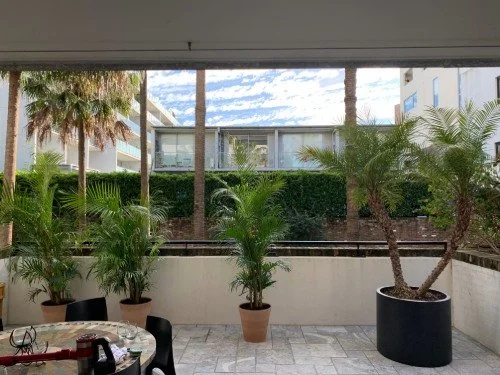
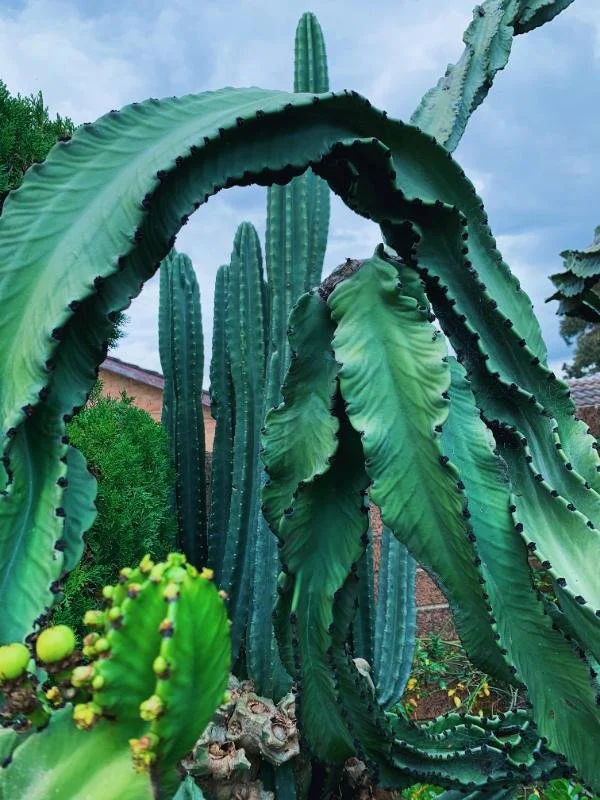
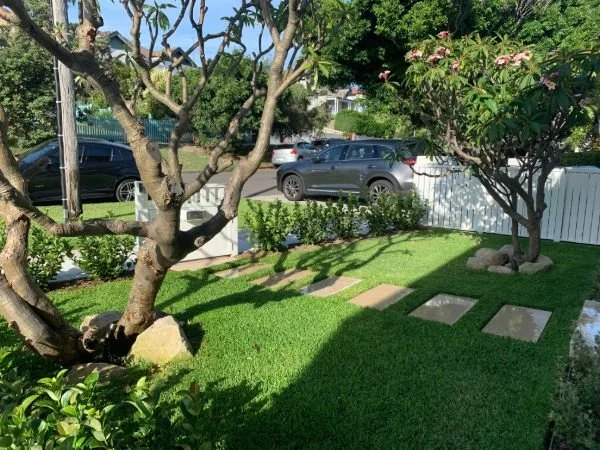
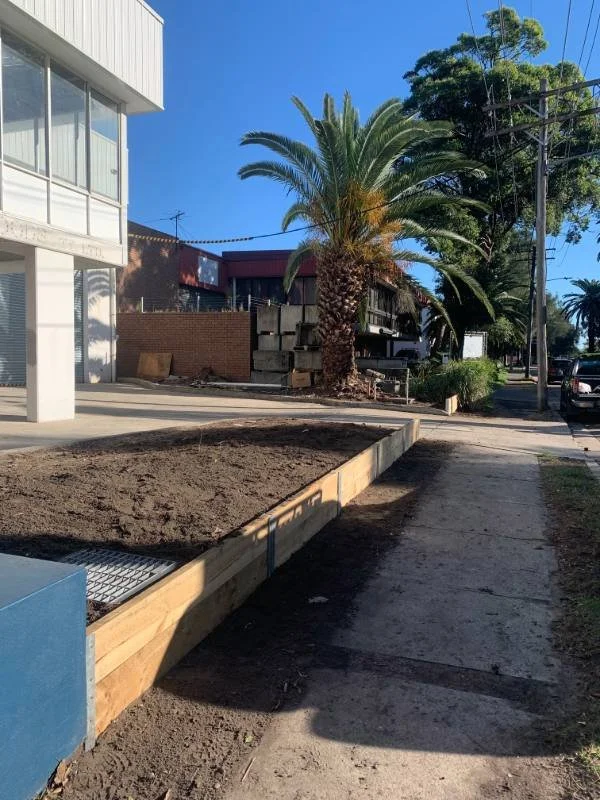
Wherever your garden is, we bring the same precision, knowledge, and design-led care.
FAQS
Is Star Jasmine suitable for Sydney gardens?
Star Jasmine is one of the most reliable plants available for Sydney gardens. It performs across
every Sydney microclimate — from full coastal exposure to deep shaded courtyards — and
tolerates the full range of Sydney soil types from sandy eastern suburbs profiles to clay-heavy
inner west gardens. The fragrant white flowers appear reliably every spring regardless of
position, making it one of the few plants that delivers both performance and sensory value
across the board.
What is the difference between Star Jasmine and Tricolour Star Jasmine?
The standard Star Jasmine (Trachelospermum jasminoides) is the stronger, faster-growing form
— best used as a climber on fences, trellises, and walls. The Tricolour cultivar (T. jasminoides
‘Tricolour’) is slower-growing with new growth that flushes pink and white before maturing to
dark green. Tricolour is better suited to groundcover use where its moderate spread is an
advantage, and to design schemes where the variegated foliage adds interest at ground level.
Can Star Jasmine grow in full shade?
Yes — Star Jasmine is one of very few ornamental plants that performs genuinely well in full
shade. It maintains healthy, dense foliage in shaded positions but flowers less prolifically than
in sun. For south-facing courtyards in Paddington, Surry Hills, and similar inner-city suburbs
where shade is the primary challenge, star jasmine is consistently our first recommendation.
How fast does Star Jasmine grow in Sydney?
Growth rate in the first year is moderate as the root system establishes. From the second year,
growth becomes vigorous — in a sunny position, a climber will typically reach the top of a 1.8m
fence panel within 18 months of planting. As a groundcover, expect spread of 30–50cm per year
once established. Growth rate slows significantly in deep shade but remains steady.