
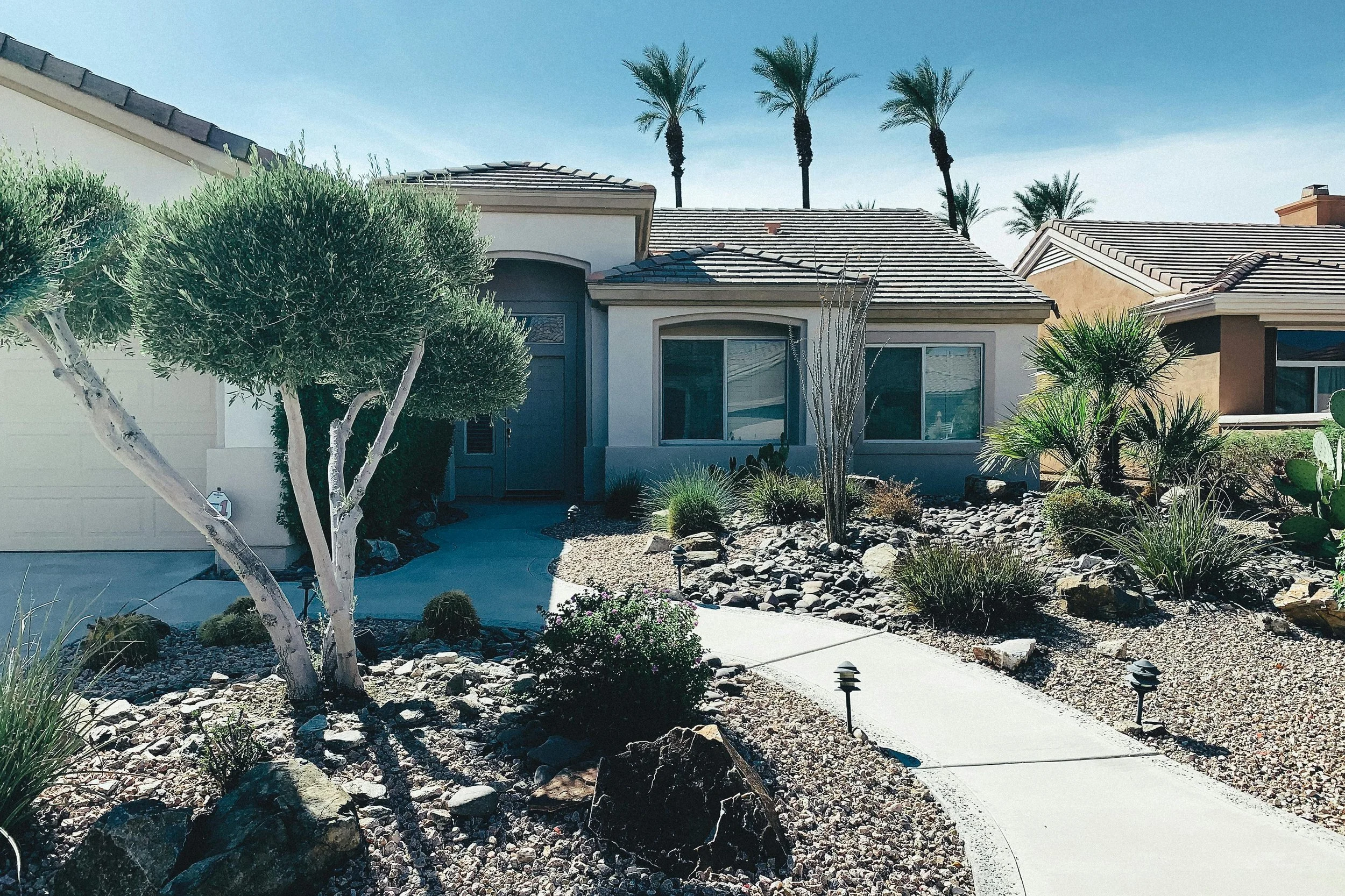
Outdoor water use accounts for roughly 40% of the water used by Sydney households. That's a significant portion – and in a city where summer restrictions are a near-annual reality, it also poses a problem for homeowners.
Xeriscape landscaping offers a smarter approach: designed-from-the-ground-up gardens that use far less water, need less maintenance, and look beautiful year-round. This guide covers everything you need to know about xeriscape landscaping in Sydney, from the seven core principles to the best plants for our specific climate.
Key Insights
Xeriscaping reduces outdoor water use by 60% or more, using climate-adapted plants and intelligent design.
It's not about rocks and cacti – well-executed xeriscape gardens are lush, layered, and architecturally striking.
Sydney's hot summers, variable rainfall, and fast-draining coastal soils make it an ideal fit.
The approach works across most property types, from inner-eastern terraces to lower north shore family gardens.
Professional design makes a meaningful difference. The right plants for your specific microclimate change everything.
What is Xeriscape Landscaping?
The term "xeriscape" was coined by Denver Water in 1981, combining the Greek word xeros (dry) with landscape. The concept: design gardens that work with your climate rather than against it.
In practice, xeriscape landscaping means selecting drought-adapted plants, improving soil health, using mulch strategically, and keeping irrigation efficient where needed. The most stubborn misconception in drought-resistant landscaping is that it means bare gravel and a lone cactus.
Done well, a xeriscape garden is layered, textured, and beautiful to look at across seasons.
Is Xeriscape Landscaping Right for Sydney?
Sydney receives around 1,200mm of rainfall annually, but it arrives unevenly – often in intense bursts followed by dry stretches that last weeks or months. Combined with Sydney Water's mandatory Water Wise Guidelines and increasingly hot, dry summers, designing gardens that can handle (and thrive) during those dry periods makes sense.
For properties across Sydney's eastern suburbs and lower north shore, where coastal soils drain quickly and summer heat amplifies off built surfaces, drought-resistant landscaping is both practical and environmentally responsible. And it doesn't ask you to compromise on aesthetics.
The 7 Principles of Xeriscape Landscaping
These seven principles, as developed by Denver Water, form the foundation of any well-executed xeriscape design:
Planning and Design: A detailed site survey maps sun exposure, drainage, soil type, and how you use the space. Every good xeriscape starts here, not at the nursery.
Soil Improvement: Healthy, well-structured soil retains moisture and supports long-term plant establishment. Soil testing services identify exactly what your soil needs before a single plant goes in.
Appropriate Plant Selection: Choosing species suited to your specific microclimate is the single biggest lever in any xeriscape design.
Limited Turf Areas: Lawn is the thirstiest element of most traditional gardens. Reducing it or replacing edges and borders with low-water groundcovers cuts demand.
Efficient Irrigation: Drip systems targeted at root zones waste far less water than sprinklers. Just 7–10cm of mulch can save up to 70% of water lost through evaporation.
Strategic Mulching: Mulch suppresses weeds, retains soil moisture, and moderates soil temperature. It's one of the highest-impact, lowest-cost interventions in any garden.
Appropriate Maintenance: Xeriscaped gardens aren't zero-maintenance, but once established, they're significantly lower-effort than a conventional planting scheme.
The Best Xeriscape Plants for Sydney
The best xeriscape plants for Sydney combine drought tolerance with real design appeal. Our plant installation palette typically draws from three main groups:
Australian natives: Lomandra, Dianella, Westringia, Banksia, and Kangaroo Paw (Anigozanthos) are once-established stalwarts that can handle rainfall-only conditions through most Sydney summers.
Mediterranean species: Lavender, rosemary and Teucrium thrive in Sydney's coastal warmth and well-draining soils.
Architectural succulents and groundcovers: Agave attenuata, Aloe, and Dymondia add structure and textural contrast with minimal water requirements.
Mixing these three groups creates a layered, visually dynamic garden – one that performs well in dry summers without becoming a maintenance burden.
DIY vs Professional Xeriscape Design
There's a fair amount you can do yourself: swap out thirsty plants for drought-tolerant alternatives, increase mulch depth, and reduce lawn coverage. But the gap between a functional xeriscape and a refined one usually comes down to the depth of the design.
Professional landscape design accounts for what's hard to assess from street level – soil composition, drainage patterns, how plants will interact as they mature, which species suit your specific aspect and microclimate, and how the palette holds together visually across seasons. Our soft landscaping service is built precisely around these horticultural considerations, not just aesthetics.
If you're working with a premium property and want a result that's as refined as it is resilient, the design investment pays for itself quickly in water savings, reduced maintenance, and a garden that actually improves with age.
Explore Xeriscape Landscaping for Your Property
Sydney's climate isn't getting more forgiving. Xeriscape landscaping is a direct response to that reality: gardens designed to thrive in the conditions we actually have, not the temperate ideal that most traditional planting schemes quietly assume.
The best xeriscape gardens aren't just water-efficient; they're also sustainable, architecturally considered, horticulturally layered, and genuinely beautiful year-round.
That's exactly what we do at Succulent Designs. Whether you're starting from scratch or looking to rework an existing garden that's struggling through summer, our team brings deep horticultural knowledge and considered design thinking to every project.
Get in touch to book a site consultation, and we'll start with the fundamentals: your soil, your site, and what you actually want from your garden.
FAQs
-
Xeriscaping in Australia involves designing gardens with drought-adapted plants, improved soil structure, efficient irrigation, and strategic mulching to significantly reduce or eliminate the need for supplemental watering. The term was coined by Denver Water in 1981, but the underlying principles align naturally with Australian conditions, where variable rainfall and periodic restrictions make water-efficient gardens both practical and responsible.
-
Very much so. Sydney's hot, dry summers and fast-draining coastal soils make drought-resistant landscaping a genuinely practical choice. Xeriscape plants selected for Sydney's conditions establish quickly and perform well through dry periods without constant irrigation. You're essentially designing for the climate you actually have, not the one you wish you had.
-
During establishment (typically the first one to two growing seasons), new plants need regular watering to develop root systems. Once established, most xeriscape plants for Sydney can survive on rainfall alone in normal years, with minimal supplemental watering during extended dry spells. Getting establishment right is one of the key reasons professional installation matters.
-
Top performers include Australian natives like Lomandra, Westringia, and Kangaroo Paw; Mediterranean species like lavender, rosemary, and olive; architectural succulents such as Agave attenuata; and drought-tolerant groundcovers like Dymondia and creeping thyme. The right selection depends on your specific site, including aspect, soil type, and proximity to the coast.
-
Research indicates that well-designed xeriscape gardens can reduce outdoor water use by 60% or more compared to conventional planting. Since outdoor use accounts for around a quarter of Sydney household water consumption, those savings add up meaningfully on your water bill and over time.
-
Absolutely. Xeriscaping isn't about eliminating lawn, it's about using it intentionally. Limiting turf to areas where it serves a clear function (a play surface, a dining surrounds, a visual breather between planted zones) while replacing high-maintenance edges with low-water groundcovers or mulched beds is a common and highly effective approach.