
Westringia Growing gUIDE
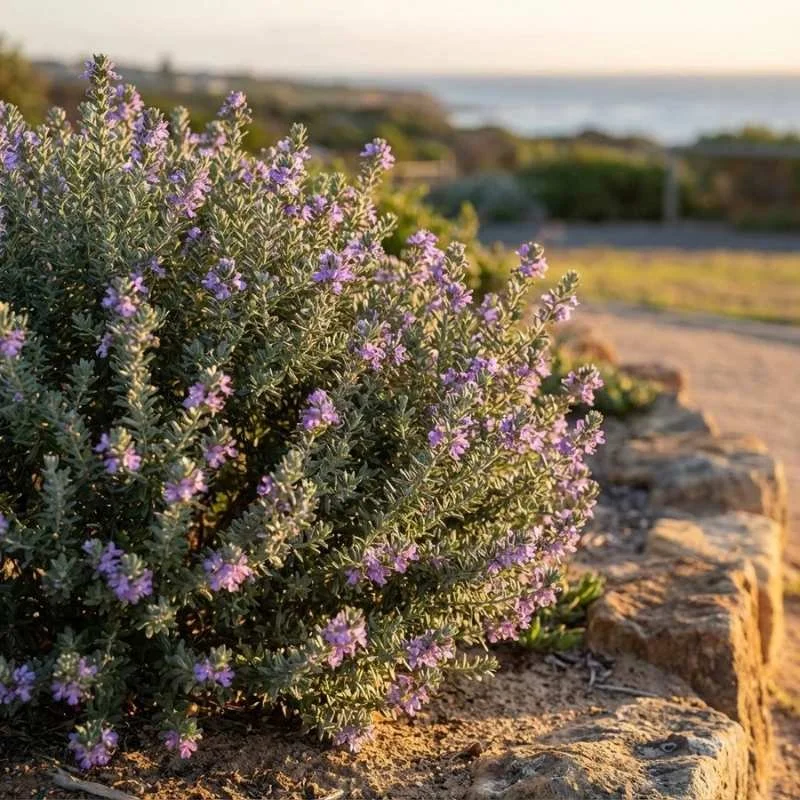
Westringia ‘Grey Box’ has become one of our most frequently specified plants for modern Sydney gardens. It delivers the clean, architectural hedging that contemporary garden design demands while being native, drought-tolerant, and genuinely low-maintenance once established. For clients who want the crisp geometry of Buxus without the maintenance burden, Westringia is the answer.
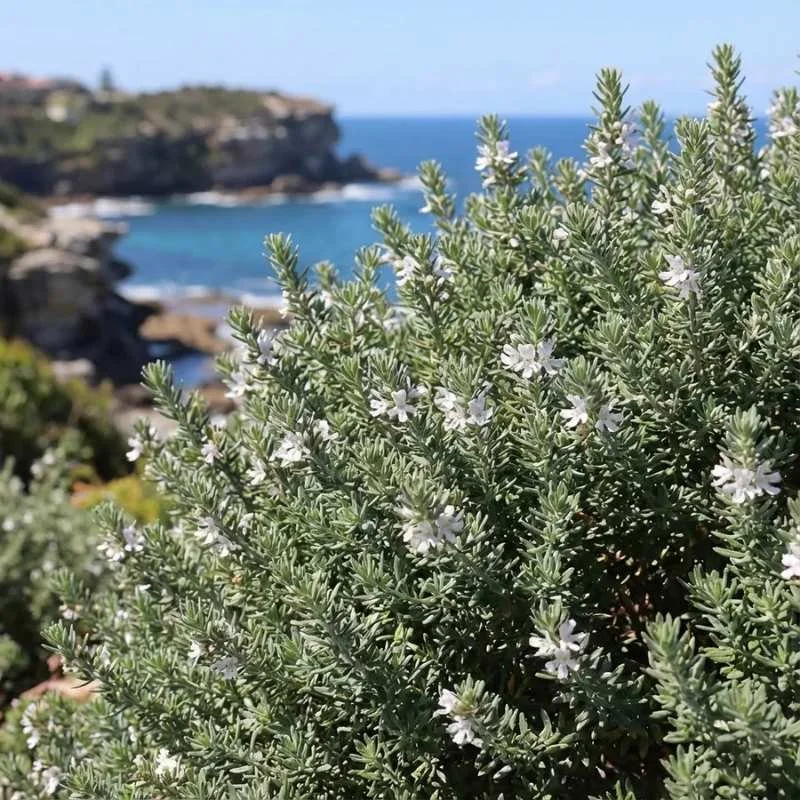
The silver-grey foliage of ‘Grey Box’ is its primary design asset. It provides contrast that few other low hedging plants can match — silver-grey against darker foliage backgrounds, against rendered walls, against gravel or paving creates exactly the kind of tonal layering that makes a modern planting scheme feel considered rather than accidental.
Keeping a Westringia HEALTHY
Being native to coastal NSW, it is naturally adapted to the conditions that define much of our service area — salt exposure, free-draining sandy soils, and the strong summer sun of Sydney’s coastal suburbs. In Bondi, Coogee, and Bronte gardens where salt spray and sandy soils challenge many exotic species, Westringia performs without complaint.
One important point from our maintenance experience: Westringia does not like sitting in wet soil. It is a coastal heath plant by origin — adapted to free-draining sandy profiles, not to heavy clay or waterlogged conditions. In drainage-compromised positions it will yellow, defoliate from the base, and decline. Getting the drainage right before planting matters considerably more than anything you do afterwards.
Quick Facts
| Botanical name | Westringia fruticosa ‘Grey Box’ |
|---|---|
| Common name | Westringia (Coastal Rosemary) |
| Plant family | Lamiaceae |
| Plant type | Evergreen native shrub |
| Mature size | 0.6–1.2m H × 0.6–1.2m W (clipped); to 1.5m unclipped |
| Aspect | Full sun |
| Flowers | White-lilac, small, year-round |
| Origin | Eastern Australia (native, coastal) |
| Best planting time | Autumn–spring |
| Maintenance level | Low |
| Sydney suitability | Eastern Suburbs ✓ | Inner West ✓ | North Shore ✓ | Coastal exposed ✓ |
Landscape Uses and Style
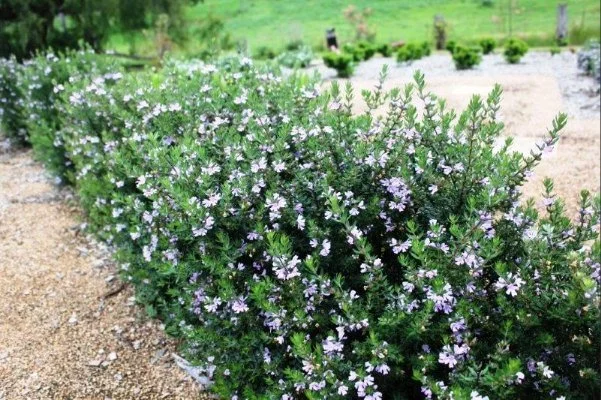
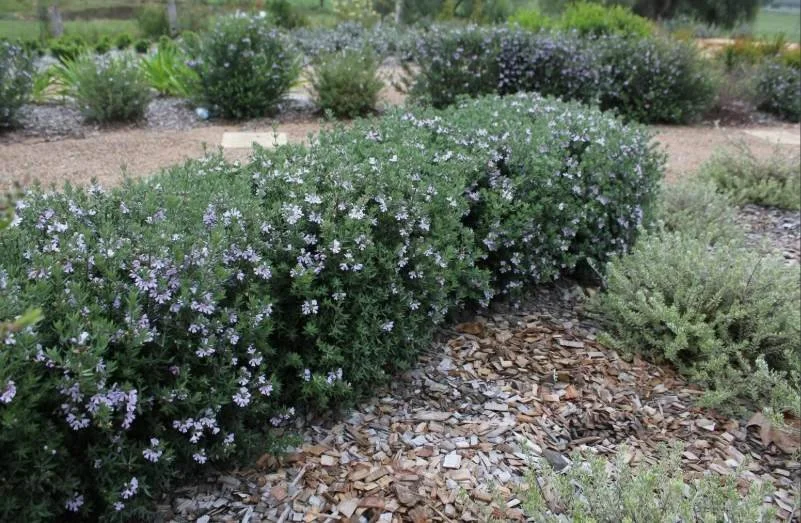
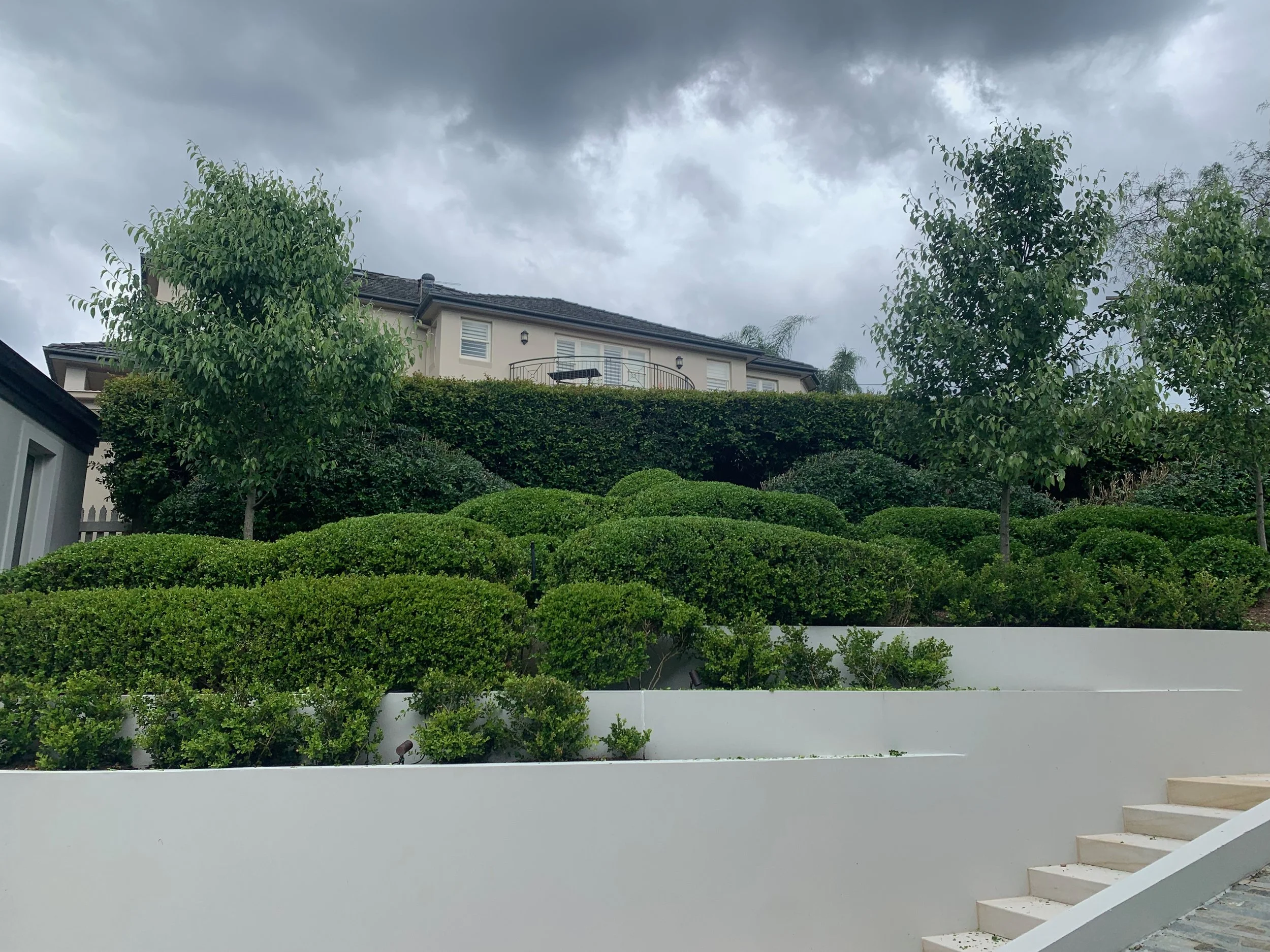
Westringia ‘Grey Box’ is primarily a hedging and clipped form plant. It can be shaped into balls, cubes, cylinders, low hedges, and irregular cloud forms — it responds well to the full range of topiary techniques and holds its shape reliably between cuts. We use it as a low formal hedge in contemporary garden beds, as clipped balls in pairs at entry gates, as an informal low hedge along pathways, and as a contrast plant alongside darker foliage species.
In terms of design style, it is most at home in modern, coastal-contemporary, and native-contemporary schemes. The silvery, somewhat soft-textured foliage gives these schemes the coastal quality that clients in the Eastern Suburbs and North Shore are consistently drawn to — it reads as relaxed and sophisticated simultaneously.
Companion Plants
Westringia ‘Grey Box’ as a low foreground hedge works beautifully in front of Lilly Pilly ‘Resilience’ — the silver-grey against Lilly Pilly’s deep green and copper new growth is one of our most reliable planting combinations. Lomandra ‘Tanika’ behind or beside it adds the strappy native grass texture that completes a contemporary native palette. For a coastal scheme, combine with Banksia integrifolia above for a layered composition that suits Sydney’s sandy coastal soils.
Growing Conditions
Full sun — Westringia requires good light to maintain dense, vigorous growth and hold its shape well. In part shade it grows looser and less dense. Free-draining soil is essential — this is the primary non-negotiable. Sandy soils, gravel soils, and well-amended clay are all suitable; poorly draining clay or consistently wet positions are not. Drought tolerant once established. Excellent salt tolerance. Does not require heavy fertilising — a light slow-release native fertiliser in spring is sufficient.
Leaves, Flowers, Fruit
Evergreen. Leaves are small, narrow, and grey-green to silver-grey — the distinctive foliage colour is the primary ornamental feature of ‘Grey Box’. The grey is more pronounced in full sun; plants in part shade tend toward greener foliage and lose some of the silver contrast. Small white-lilac flowers appear year-round, most prolifically in spring and summer. No significant fruit.
Maintenance
Clip two to three times per year to maintain shape. Westringia is responsive to shearing and recovers quickly after cutting. Unlike Buxus, it tolerates harder pruning and can be cut back significantly if overgrown or leggy, but it is important not to cut back to bare wood as the plant may not recover from this. Minimal watering once established. No specialist fertiliser required.
Potential Problems
Waterlogging: The primary risk. Westringia in wet or poorly draining soil will decline — typically showing yellowing, sparse foliage from the base upward, and eventual dieback. This is a drainage problem, not a disease problem. Improve drainage before planting.
Leggy growth in shade: Westringia in insufficient light will grow open and loose rather than dense and compact, undermining its usefulness as a clipped hedge. Ensure full sun positioning for hedging applications.
Seen in Our Work
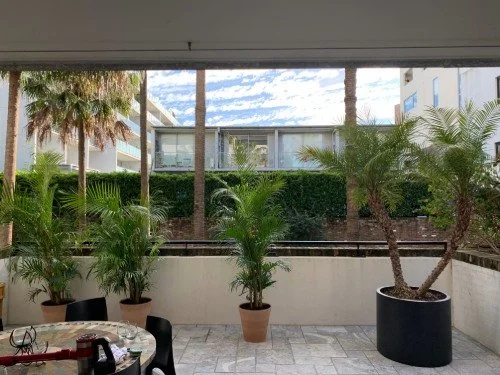
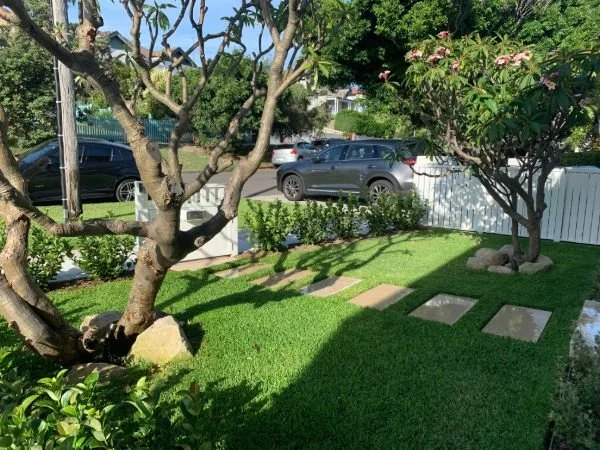
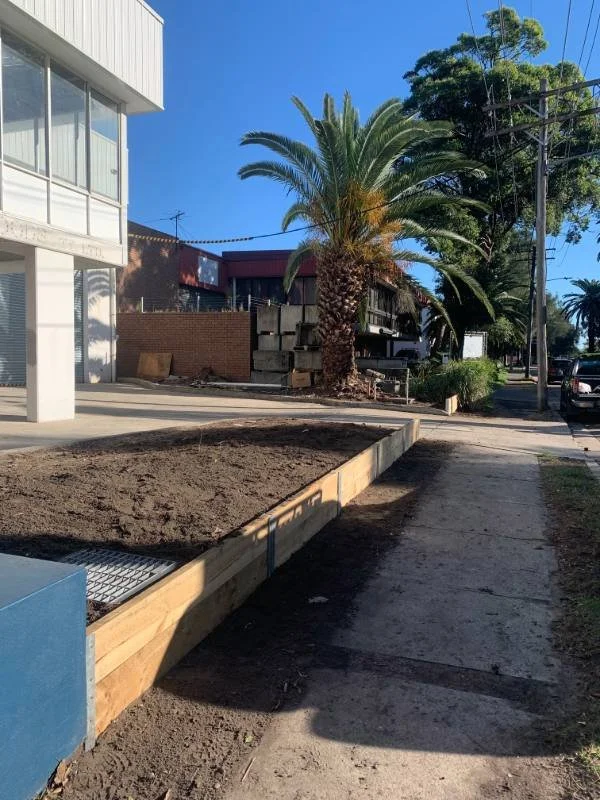
Westringia fruticosa features in multiple Eastern Suburbs and North Shore installations as a low hedging and mass planting component. We specified a related compact Westringia cultivar in our Botany commercial project as part of the coastal native palette.
Wherever your garden is, we bring the same precision, knowledge, and design-led care.
FAQS
Is Westringia a good alternative to Buxus in Sydney?
Yes — Westringia ‘Grey Box’ is our preferred native alternative to Buxus for low hedging in Sydney’s contemporary gardens. It clips readily into formal shapes, holds structure between cuts, and is significantly more drought-tolerant and lower-maintenance than Buxus once established. The silver-grey foliage is a different aesthetic — better suited to modern and coastal-contemporary schemes than to classical formal or Hamptons styles, where Buxus remains the stronger choice.
Does Westringia grow in clay soil?
Westringia will grow in clay soil provided drainage is adequate. It does not tolerate waterlogging — in heavy clay that holds water after rain, it will decline. If planting in clay, improve drainage with gypsum and organic matter, and consider raising the planting level slightly.
How often should I clip Westringia?
For a maintained formal hedge or clipped ball, two to three clips per year is sufficient — after the spring growth flush, again in mid-summer, and a light tidy in autumn if needed. Westringia is more forgiving of timing than many hedging plants and tolerates harder cutting than Buxus if it becomes overgrown.
Can Westringia handle coastal conditions in Sydney?
Westringia fruticosa is native to coastal NSW and is one of the most salt-tolerant low hedging plants available for Sydney gardens. It handles the salt exposure, sandy soils, and full sun of Bondi, Coogee, and Bronte gardens without protection. For fully exposed positions with direct salt spray, it is one of our first recommendations.