
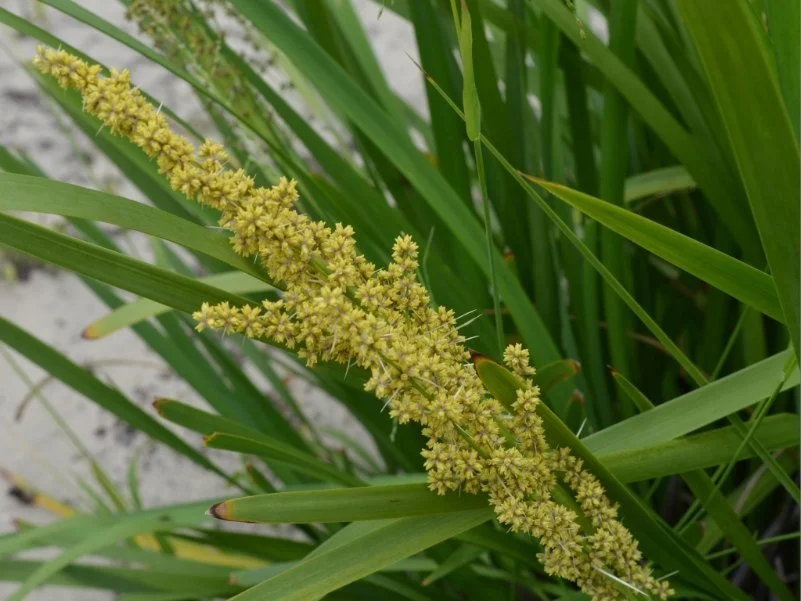
Lomandra Growing gUIDE
Lomandra is, as a genus, about as tough as Sydney garden plants get. ‘Tanika’ sits within that tradition — once established, it handles drought, compaction, poor soil, neglect, and most of what Sydney’s climate and urban gardens throw at it. We use it across all soil types in our service area, from the sandy coastal profiles of the eastern suburbs to the clay-heavy soils of Paddington and the inner west, and it performs in all of them.
That said, ‘Tanika’ is slightly more considered in its establishment phase than standard Lomandra longifolia. It is a finer-leaved, more refined cultivar — better looking, but not quite as bulletproof in its first season. Once through establishment — typically one full growing season with appropriate watering — it settles in and becomes the characteristically hardy lomandra that Sydney landscapers rely on. The payoff is a plant that looks considerably more elegant than the standard coarser-leaved species, without sacrificing core durability.
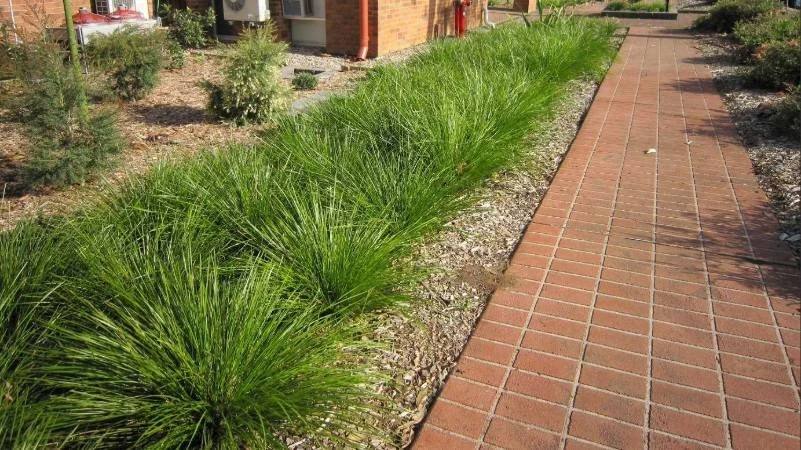
We have used ‘Tanika’ extensively across the Eastern Suburbs and North Shore — in the Botany commercial installation, at pathway borders in Woollahra, and as mass groundcover in coastal settings. In every case it has delivered the low-maintenance, structural ground-plane coverage that contemporary Sydney gardens need.rr
quick Facts
| Botanical name | Lomandra longifolia ‘Tanika’ |
|---|---|
| Common name | Lomandra (Tanika Mat-rush) |
| Plant family | Asparagaceae |
| Plant type | Evergreen native perennial grass |
| Mature size | 0.5–0.6m H × 0.6–0.8m W |
| Aspect | Full sun to full shade |
| Flowers | Cream-yellow, fragrant, spring–summer |
| Origin | Eastern Australia (native) |
| Best planting time | Autumn–winter |
| Maintenance level | Low |
| Sydney suitability | Eastern Suburbs ✓ | Inner West ✓ | North Shore ✓ | Coastal exposed ✓ |
Landscape Uses and Style
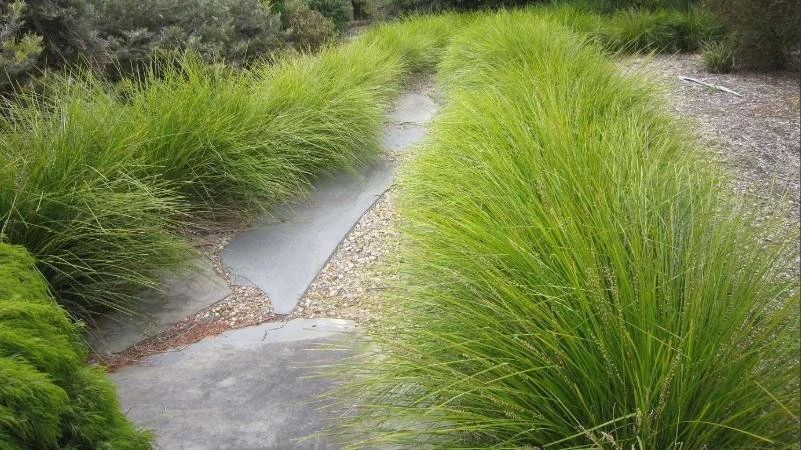
Lomandra ‘Tanika’ is primarily a mass groundcover and border planting plant. Its arching fine-leaved form creates a soft, textural ground plane that contrasts well with the harder materials — paving, rendered walls, timber — common in Sydney gardens. We use it along pathway borders, at the base of feature trees and hedges, as mass planting between larger shrubs, under established trees where other groundcovers struggle, and in large-scale native planting schemes as the structural ground layer.
It is most at home in native-contemporary and coastal-contemporary garden styles, but its fine texture and architectural form translate well into modern minimalist schemes. In native designs, it is usually the ground-plane plant around which the rest of the palette is built.
Companion Plants
Lomandra ‘Tanika’ works as the groundcover layer beneath almost everything else in the native palette. We pair it with Westringia ‘Grey Box’ for a classic contemporary native combination — the silver hedging form above, fine arching grass beneath. Banksia integrifolia above provides the feature tree layer. Grevillea ‘Robyn Gordon’ alongside adds year-round flowering colour at mid-height. Lilly Pilly ‘Resilience’ behind as a screen completes a layered native-contemporary composition.
Growing Conditions
Full sun to full shade. Suitable for all Sydney soil types — sandy coastal, clay, sandstone-derived, and compacted urban fill. This soil adaptability is a genuine practical advantage: most fussy plants require soil preparation and amendment; Lomandra largely doesn’t. Drought tolerant once established. Handles periodic waterlogging better than most native grasses. Frost tolerant. Good salt tolerance. Moderate growth rate — spacing for mass planting (typically 60–80cm centres) is important to get right at installation.
Leaves, Flowers, Fruit
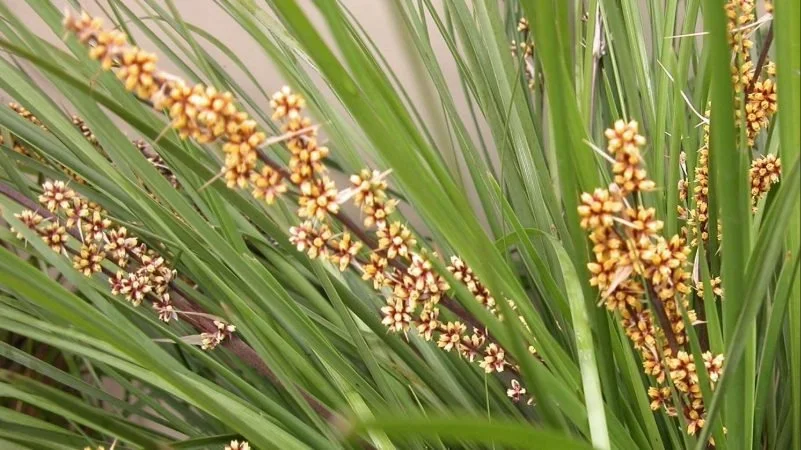
Evergreen. Leaves are narrow, arching, mid-green — finer than the species, with a softer, more pendulous habit. Leaf edges are smooth, not serrated — an important practical point, as standard Lomandra has finely serrated edges that can catch skin. Cream-yellow flowers on arching spikes in spring–summer, lightly fragrant. No significant fruit.
Maintenance
Lomandra ‘Tanika’ requires very little maintenance once established. The main intervention is a hard cut-back every two to three years to rejuvenate the clump — cut back to approximately 15cm from the ground in late winter before new growth begins. This removes accumulated dead material and encourages fresh growth. Without periodic rejuvenation cuts, older clumps develop a dead centre. Beyond this, remove any dead or damaged leaves as needed. Watering during establishment is important; once through the first season, established Lomandra manages on Sydney rainfall with supplementary watering only during extended dry periods.
Potential Problems
Lomandra ‘Tanika’ is low-problem in Sydney gardens. The main issue is establishment-phase dryness — plants that dry out severely before roots are established may take considerably longer to settle. Water during the first full growing season is the one genuine management requirement. Snails can damage young plants in shaded positions in the first season; a snail bait application at planting addresses this. Crown rot is rare but possible in chronically waterlogged positions — the solution is drainage improvement before planting.
Seen in Our Work
Lomandra longifolia is featured in our Botany commercial installation as a key component of the all-native ground-plane planting — specified for its tolerance of the site’s deep sandy, free-draining coastal soil.
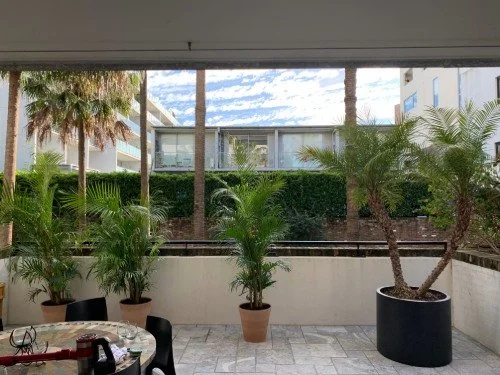
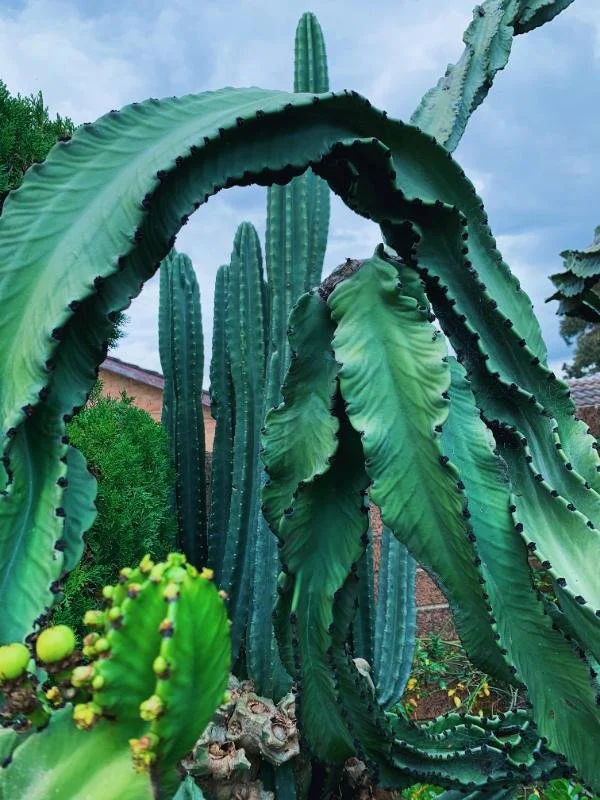
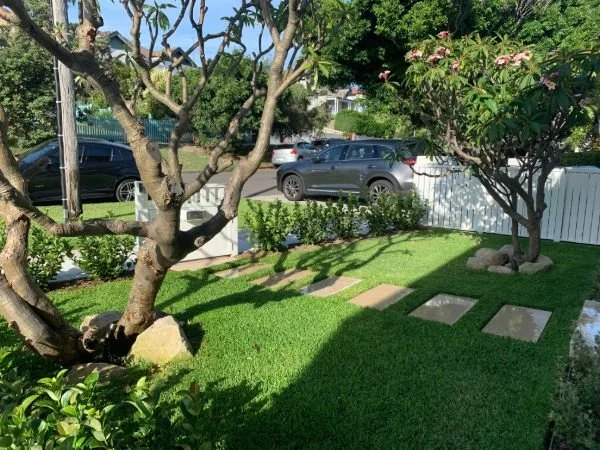
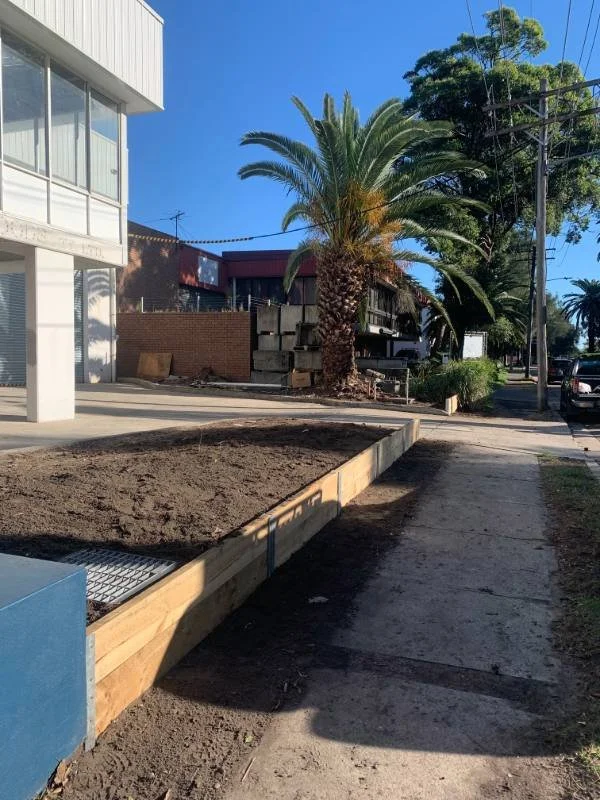
Wherever your garden is, we bring the same precision, knowledge, and design-led care.
FAQS
Is Lomandra ‘Tanika’ suitable for all Sydney soil types?
Yes — Lomandra ‘Tanika’ is one of the most soil-adaptable plants in the Sydney garden palette. It performs in sandy coastal soils, heavy clay, sandstone-derived soils, and compacted urban fill without requiring significant amendment. The one condition it handles less well than most is prolonged waterlogging, though it tolerates occasional wet periods better than most native grasses.How fast does Lilly Pilly grow as a hedge in Sydney?
In good conditions with adequate soil preparation and regular watering during establishment, expect 30–50cm of new growth per year. A hedge planted at 1.5m height can reach 2.5–3m within two to three seasons without clipping.
How is Lomandra ‘Tanika’ different from standard Lomandra?
‘Tanika’ is a finer-leaved, more refined cultivar of Lomandra longifolia with a softer, more arching habit and smooth rather than serrated leaf edges. It looks more elegant than the standard coarser species and is more comfortable in premium planting schemes. It is slightly less bulletproof in the establishment phase — it needs attentive watering through its first growing season more than the standard species does. Once established, the core hardiness of the genus reasserts itself.
How far apart should I plant Lomandra for mass planting?
For a mass groundcover effect, plant at 60–80cm centres. At this spacing, clumps will join to form continuous coverage within two to three growing seasons. Tighter spacing (50cm) produces coverage faster but is more expensive.
Does Lomandra need to be cut back?
Every two to three years, a hard cut-back to 15cm from the ground in late winter will rejuvenate the clump and encourage fresh growth. Without this periodic renovation, older clumps develop a dead centre that reduces their appearance. Beyond this occasional cut-back, Lomandra requires no regular pruning.