
Softscaping Sydney: Plants, Soil & Garden Design Guide for Sydney Landscapes
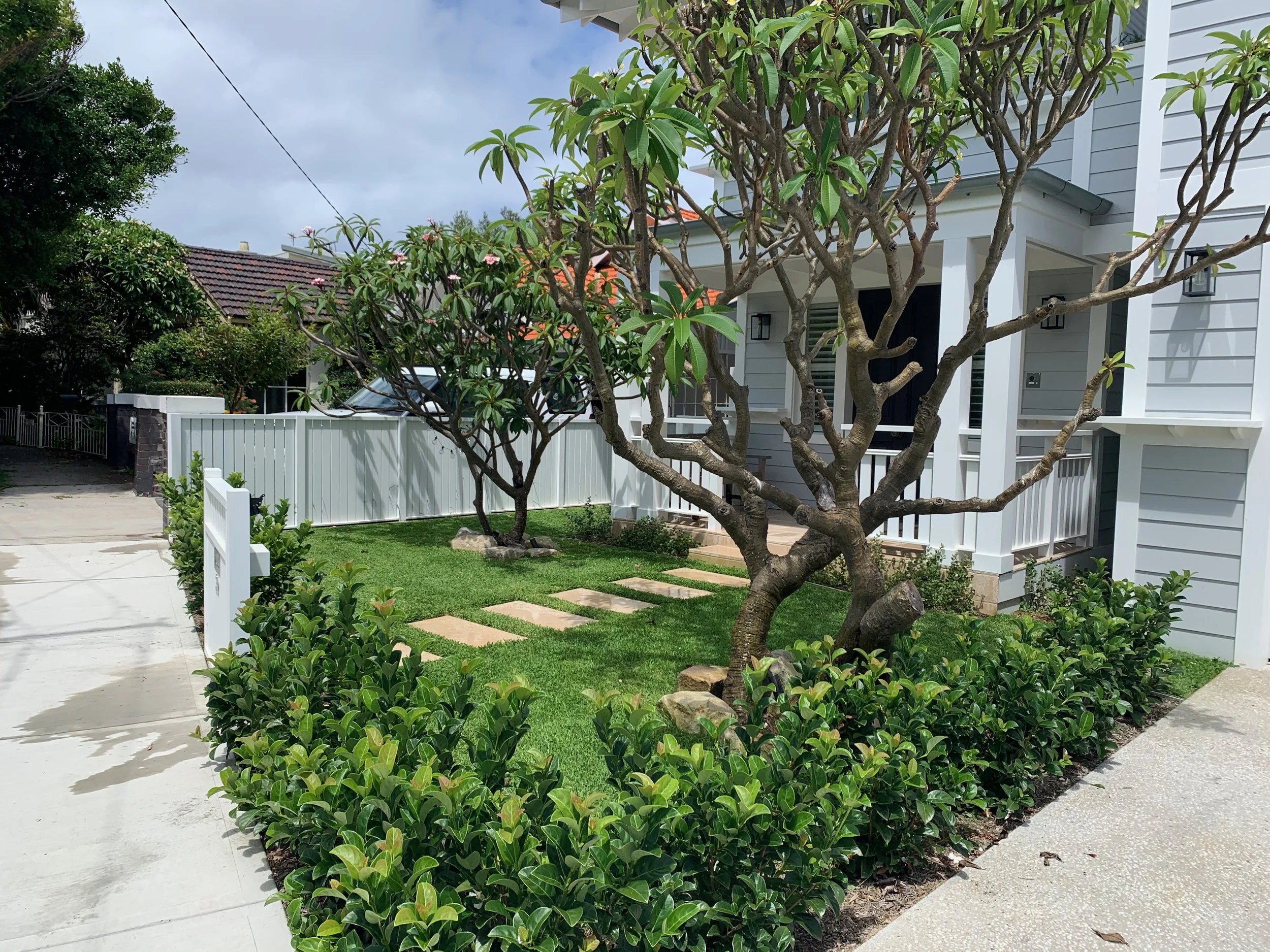
Viburnum odoratissimum hedge used as a living boundary instead of fencing — a common softscaping strategy in Sydney gardens.
Softscaping in Sydney refers to the living elements of landscape design — including plants, soil preparation, mulch, turf, and irrigation systems — as distinct from structural hardscape features like paving, decking, and retaining walls.
Sydney's most memorable gardens are rarely defined by paving or stonework alone. The true character of an outdoor space comes from its living components — the trees that filter afternoon light, the grasses that catch the harbour breeze, the soil ecosystems working quietly beneath the surface.
In a city as climatically diverse as Sydney — from salt-exposed coastal gardens in Bondi to clay-heavy inner-west terraces in Balmain — getting softscaping right is the difference between a garden that thrives and one that merely survives.
At Succulent Designs Sydney, we've designed and installed softscapes across the Eastern Suburbs and Lower North Shore since 2019. This guide covers everything you need to know: what softscaping involves, how to plan it for Sydney's specific conditions, what it costs, and which plants actually perform here.
What Is Softscaping? (And How It Differs From Hardscaping)
In professional landscape design, outdoor spaces divide into two categories.
Hardscaping covers the structural, non-living elements: patios, decks, retaining walls, pathways, and pergolas. These create the framework of a garden — its bones.
Softscaping covers everything living: trees, shrubs, ornamental grasses, groundcovers, lawn, soil preparation, mulch layers, and irrigation systems. These are the elements that grow, change, and bring a garden to life.
Neither works without the other. A garden of pure hardscape feels sterile. A garden without structure becomes unmanageable. The best Sydney landscapes integrate both — hardscape providing usability and form, softscaping providing texture, colour, and ecological function.
For most residential projects, softscaping can account for roughly 40–60% of the total landscape budget and has a disproportionate impact on how a finished garden feels day to day.
Why Softscaping Requires a Sydney-Specific Approach
Sydney isn't one climate — it's several. A softscape designed for Mosman's sheltered harbour gardens will fail in Bondi's exposed coastal conditions. Understanding your microclimate is the foundation of every planting decision.
Eastern Suburbs: Coastal Exposure and Sandy Soils
Suburbs including Bondi, Coogee, Bronte, and Rose Bay face strong onshore winds, high UV, salt spray, and predominantly sandy soils with poor water retention. Plants here must tolerate drought, wind, and reflected heat from hard surfaces.
Species that consistently perform: coastal rosemary (Westringia fruticosa), pigface (Carpobrotus), native flax lily (Dianella), and lilly pilly hedges for wind screening. Soil in these areas needs organic matter added before planting — sand drains too freely for most ornamentals without amendment.
Inner West: Clay Soils and Drainage Challenges
Balmain, Rozelle, Annandale, and Leichhardt sit on dense clay soils that compact easily, drain poorly, and become waterlogged after heavy rain. Root rot is a real risk for plants installed without proper soil preparation.
For clay-heavy sites we always begin with soil testing services Sydney, gypsum (clay-breaker) application, and compost incorporation before any planting takes place. Species selection shifts toward clay-tolerant natives: lomandra, kangaroo paw, and lilly pilly all establish well once drainage is addressed.
Lower North Shore: Sandstone, Shade, and Bush Interface
Mosman, Cremorne, and Neutral Bay gardens often feature sandstone, established tree canopy, and proximity to bushland. Shade tolerance becomes a key selection criterion, and fire-resistant species are worth considering near reserves.
Shade-tolerant performers: native violet (Viola hederacea), bird's nest fern (Asplenium australasicum), mondo grass (Ophiopogon japonicus), and dichondra (Dichondra repens) as groundcover. These suburbs also suit more formal planting styles — clipped hedges of Syzygium and Murraya work well against sandstone architecture.
Paddington and Woollahra: Heritage Terraces and Compact Courtyards
Narrow rear courtyards in heritage terraces require a completely different approach. Space is limited, light is often restricted, and planting beds may be as narrow as 400mm. Vertical planting, layered containers, and low-maintenance groundcovers do more work than traditional garden beds.
The Best Plants for Softscaping and Soft Landscaping in Sydney Gardens
Plant selection is where softscape design lives or dies. The following categories form the backbone of most successful Sydney planting schemes. Many of the species below are used regularly in our plant installation projects across Sydney.
Structural Natives (the workhorses)
These species form the mid-layer of most designs — reliable, low-maintenance, and wildlife-supporting.
Lomandra longifolia — virtually indestructible, suits clay and sand, full sun to part shade
Westringia fruticosa — coastal-tolerant, responds well to clipping, excellent hedging plant
Banksia integrifolia — coastal banksia, handles salt spray and sandy soils
Grevillea 'Superb' — year-round flowering, attracts birds, drought-tolerant once established
Callistemon viminalis — weeping bottlebrush, reliable in wet or dry conditions
Ornamental Grasses (texture and movement)
Poa labillardierei — native tussock grass, low maintenance, suits most Sydney soils
Carex testacea — copper sedge, excellent contrast plant in contemporary designs
Ficinia nodosa — native knobby club-rush, distinctive upright form, handles coastal sandy soils and drainage-adjacent positions
Flowering Species (seasonal colour)
Kangaroo Paw (Anigozanthos) — architectural form, bird-attracting, drought tolerant
Salvia varieties — long flowering, heat and drought tolerant, possum resistant
Agapanthus — near-indestructible in Sydney, excellent mass planting along boundaries
Groundcovers (the unsung heroes)
Groundcovers suppress weeds, retain moisture, and eliminate lawn maintenance in areas where grass won't establish well.
Dichondra repens — dense, lush, shade tolerant, minimal mowing required
Native violet (Viola hederacea) — spreads readily under trees, purple flowers spring–summer
Creeping thyme — aromatic, drought-tolerant, handles light foot traffic
Soil Preparation: The Step Most Homeowners Skip
Healthy soil isn't glamorous, but it determines whether a $15,000 planting scheme thrives or struggles within two seasons.
We soil test every site before installation. In Sydney, results typically reveal one of three profiles: sandy coastal soils with low organic matter and poor water & nutrient retention; clay-dominant inner suburban soils with drainage issues and compaction; or mixed profiles in newer developments where topsoil has been stripped and replaced with fill.
Each requires a different remediation approach:
Sandy soils: Add quality compost, incorporate water-retaining granules in garden beds (if necessary), and mulch immediately after planting to protect soil microbiology.
Clay soils: Apply gypsum, fork through existing soil, incorporate compost, and consider raised bed construction for problem areas.
Stripped/fill sites: These are the most challenging. Fill soil often contains rubble, lacks microbial activity, and has unpredictable drainage. We rebuild the soil profile from scratch — it adds cost upfront but prevents replacement planting within 12–18 months.
Mulching follows soil preparation on every project. A layer of hardwood chip or composted organics reduces evaporation significantly, suppresses weeds, and feeds the soil as it breaks down.
Lawn Alternatives Gaining Ground Across Sydney
Water restrictions, busy lifestyles, and changing aesthetic preferences are driving a significant shift away from traditional lawn. These alternatives perform better in most Sydney conditions and require a fraction of the maintenance.
Dichondra lawn substitute — Dense, deep green, handles light foot traffic, and requires mowing perhaps four times a year rather than weekly. Works particularly well in shaded courtyards where couch grass fails.
Native groundcover gardens — A mix of native violet (Viola hederacea), running postman (Kennedia prostrata), and creeping boobialla (Myoporum parvifolium) creates a biodiverse carpet that looks intentional rather than neglected.
Gravel and planting combinations — Decomposed granite or recycled glass gravel with drought-tolerant planting produces a contemporary aesthetic with near-zero ongoing maintenance. Popular across Woollahra and Double Bay properties.
Ornamental grass meadows — For larger properties, a meadow-style planting of lomandra, poa, and kangaroo paw (Anigozanthos) produces a striking, seasonally changing landscape that mows once annually.
Planning a Softscaping Project in Sydney?
If you're considering a softscape redesign, a short site visit can identify the biggest opportunities in your garden — from soil improvements to plant selection and irrigation planning.
Succulent Designs Sydney provides on-site consultations across the Eastern Suburbs and Lower North Shore. Get in touch to arrange a softscaping consultation or site assessment.
The Softscaping Process: What to Expect
A professional softscape project at Succulent Designs Sydney follows a consistent process regardless of project size.
1. Site assessment — We evaluate sunlight patterns, existing soil conditions, drainage behaviour, access constraints, and what's already growing well.
2. Soil testing — A basic soil test identifies pH, organic matter content, and texture. Results shape every subsequent decision.
3. Concept and plant selection — We develop a planting concept that responds to the architecture of your home and the specific conditions of your site. You'll see proposed species, layout, and estimated plant sizes before any work begins.
4. Soil preparation — Before a single plant goes in, we prepare the soil. This is where most of the labour cost sits — and where long-term success is determined.
5. Planting and mulching — Plants are installed at correct spacing for mature size, then mulched immediately.
6. Irrigation — We connect or install drip irrigation and test for coverage before leaving site.
7. Establishment care — We provide written aftercare instructions and are available for questions during the critical first 12 weeks.
Common Softscaping Mistakes (and How to Avoid Them)
Planting too close together. Plants look sparse at installation spacing, so the temptation is to pack them in. Within two seasons, overcrowding causes competition, disease, and the need to remove expensive plants.
Skipping soil preparation. The single most common cause of softscape failure in Sydney. Planting directly into clay or depleted fill without amendment guarantees problems.
Choosing plants for appearance alone. A plant that looks beautiful at the nursery may be completely wrong for your microclimate, soil type, or maintenance tolerance. Always check mature size, water requirements, and performance in your specific suburb conditions.
Ignoring irrigation. Sydney summers regularly produce extended dry periods. Without at least a basic drip system, newly installed plants are vulnerable in their first two summers before root systems are established.
Frequently Asked Questions About Softscaping in Sydney
What is the difference between softscaping and hardscaping?
Hardscaping refers to the structural, non-living elements of a landscape — paving, decking, walls, and edging. Softscaping covers all living components: plants, soil, turf, mulch, and irrigation. Most landscape projects involve both, with softscaping typically determining how a finished garden feels and functions day to day.
How long does softscaping take to establish in Sydney?
Most plants are actively growing within 4–6 weeks of installation in Sydney's climate. By the end of the first summer, a well-planted softscape typically looks 70–80% of its mature appearance. Full establishment — where plants are self-sustaining with minimal irrigation — generally takes 12–18 months.
Do I need council approval for softscaping in Sydney?
In most cases, no. Planting, soil work, and irrigation fall outside development application requirements for most Sydney councils. Exceptions apply when work affects trees protected under a council's tree preservation order, or where planting is proposed within a heritage conservation area that restricts changes to front garden character.
What are the best low-maintenance plants for Sydney gardens?
Lomandra, westringia, lilly pilly, grevillea, and native grasses consistently perform with minimal intervention across most Sydney microclimates. Once established — typically after 12 months — these species require little more than an annual tidy and occasional deep watering during extended dry spells.
Can you softscape over clay soil?
Yes — but it requires soil remediation first. We address clay soils with gypsum, deep-forked compost incorporation, and in severe cases, raised bed construction. Skipping this step is the primary reason softscape installations fail in inner-west Sydney suburbs like Balmain, Annandale, and Leichhardt.
Designing Living Landscapes That Thrive in Sydney
Softscaping is the art of designing living systems that adapt to their environment while genuinely improving how outdoor spaces feel and function.
In Sydney's varied climate — from the salt winds of the Eastern Suburbs coastline to the clay-heavy soils of the inner west — there is no universal planting formula. Every successful softscape begins with understanding the specific conditions of the site: the soil, the microclimate, the architecture, and how the space will actually be used.
Done well, a Sydney softscape reduces maintenance, supports local biodiversity, lowers outdoor temperatures, and creates spaces that improve with every season.
If you're planning a softscape project in the Eastern Suburbs or Lower North Shore, get in touch with Succulent Designs Sydney for a site assessment.
Lucas Bollard is the founder of Succulent Designs Sydney and a member of The Landscaping Association (TLA). He has designed and installed softscape gardens across Sydney's Eastern Suburbs and Lower North Shore since 2019.