
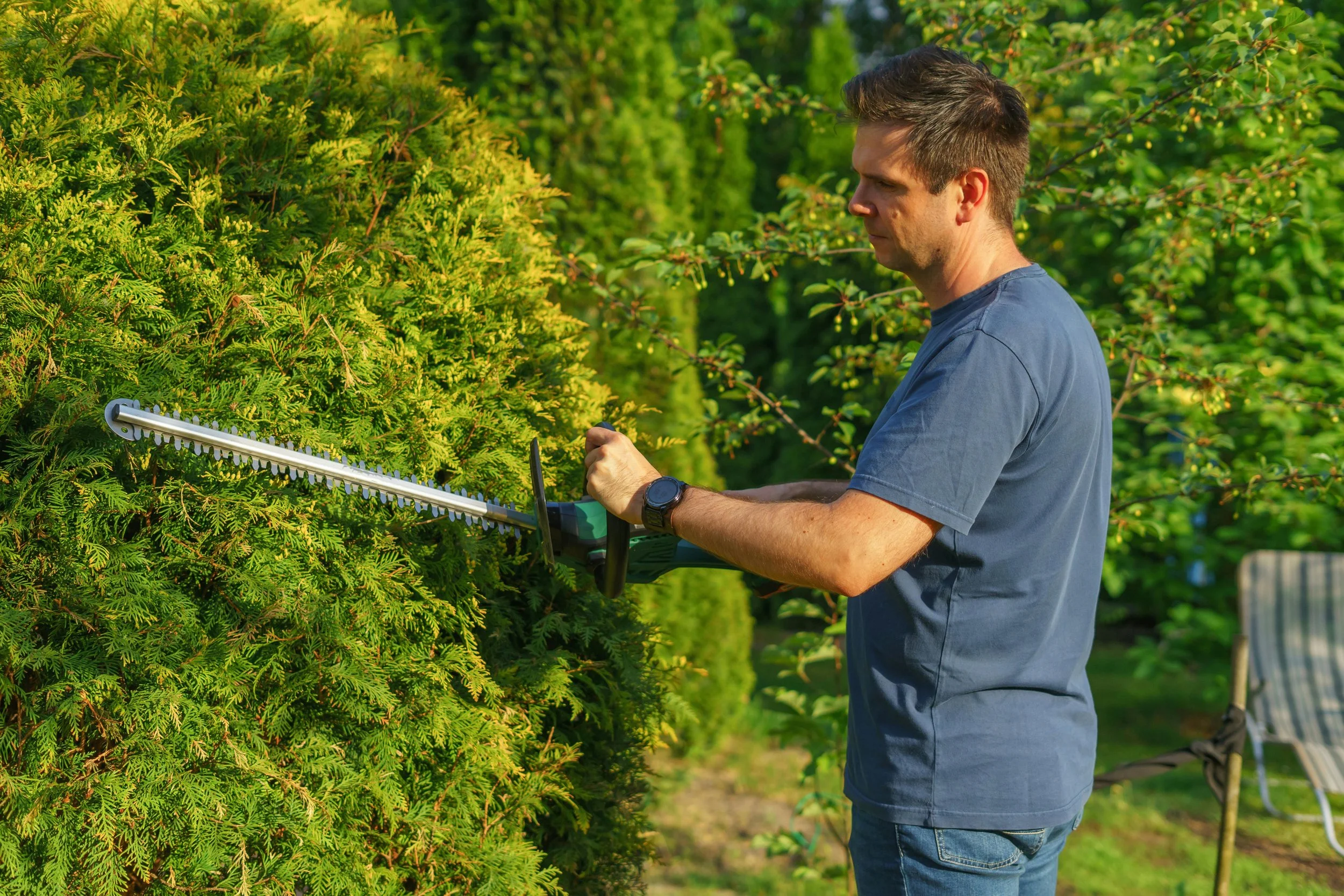
A well-shaped hedge is one of the hardest-working elements in a garden. It defines spaces, creates privacy, frames architecture, and (when properly maintained) makes everything around it look more considered. Knowing how to trim hedges correctly is what keeps them looking intentional rather than incidental. And in Sydney's climate, where growth barely pauses across spring and summer, that maintenance window is smaller than most homeowners expect.
This guide covers timing, tools, technique, and species-specific care, plus what to look for when it makes more sense to hand the job over.
Key Insights
Most Sydney hedges need a minimum of two main trims per year (late spring and early autumn) adjusted for species and growth rate
Always use sharp, clean tools. Blunt blades shred plant tissue and invite disease
Keep the base of a hedge slightly wider than the top so light reaches the lower growth
Never remove more than one-third of a hedge's volume in a single session
For large-leafed species like Photinia and Camellia, reach for hand shears rather than a mechanical trimmer to avoid brown, ragged cuts
How to Trim Hedges in Sydney: Getting the Timing Right
Sydney's temperate climate means most hedges remain actively growing for most of the year. There's no hard dormancy the way you'd see in Canberra or the Blue Mountains. Timing here requires a little more nuance than a simple seasonal rule.
As a general guide, aim for two main sessions:
Late spring (October–November), once the first flush of new growth has hardened off
Early autumn (March–April), before cooler temperatures slow things down.
Pruning in late spring after new growth has hardened allows plants to seal cuts before the heat of summer sets in – an important consideration in Sydney's warmer months.
Fast-growing species like Lilly Pilly (Syzygium spp.) and Photinia 'Red Robin' may need lighter attention every four to six weeks through the growing season to hold a crisp shape. Slower-growing Buxus can generally be managed with 2 or 3 visits per year.
One rule applies across the board: don't trim in direct sunlight or during dry spells. Heat stress on freshly cut stems accelerates moisture loss and can cause scorching, especially on Buxus and Camellias.
And before you start, always check for nesting birds. In NSW, disturbing active nests may attract penalties under the Biodiversity Conservation Act 2016.
Choosing Your Tools and How to Use a Hedge Trimmer Properly
The right tool for how to trim hedges depends on the species, the scale of the job, and the finish you're after. Here's a practical breakdown:
Hand shears – Best for fine detail, light shaping, and large-leafed plants. Slower, but the control is unmatched.
Battery-powered hedge trimmer – The go-to for longer runs and formal shaping.
Loppers – For thicker, woody interior stems that shears can't reach.
Pruning saw – Essential for rejuvenation work on neglected or overgrown hedges.
Knowing how to use a hedge trimmer properly comes down to technique as much as the tool itself. Cut the sides with sweeping arc-shaped movements, working upward. For the top, hold the blade horizontally at a slight angle (0–10°) and use steady, side-to-side strokes. Keep the blade moving for a consistent finish and avoid repeatedly chopping at a single point.
Keep blades sharp and clean. Using the wrong tools or blunt blades tears foliage instead of making clean cuts, which looks unsightly, weakens the plant, and increases the risk of infection.Clean your blades with a disinfectant solution between plants to prevent the spread of disease, particularly Buxus blight.
Safety Gear
Always wear gloves, eye protection, and ear protection when running a petrol or corded electric trimmer. Unless you are a professional, it is not advised to use a ladder while operating a hedge trimmer.
How to Trim a Hedge Straight: The String Line Method
Push a garden stake into the ground at each end of the hedge
Tie a length of string between the two stakes at exactly the height you want to cut
For hedges longer than three to four metres, add an intermediate stake to prevent the string from sagging
Step back and check the line is level before you pick up the trimmer
Work from the bottom up, using the string as your guide for the top cut
Learning how to trim a hedge straight mostly comes down to preparation and having the correct equipment. You should step back occasionally to assess your progress and ensure the hedge remains symmetrical. Your eye will catch things that are harder to spot up close.
Always shape the hedge slightly wider at the base than the top. This trapezoidal profile ensures sunlight reaches the lower branches, preventing the base from going sparse and woody over time.
Does Trimming Change by Species?
Yes – and this is where a lot of DIY results fall short. The most common hedging plants in Sydney's eastern suburbs and lower north shore each have their own preferences:
Buxus – Tolerates firm trimming. Avoid cutting in direct sun or heat. Monitor closely for Buxus blight, which spreads quickly in humid conditions.
Lilly Pilly – Fast-growing, forgiving, and responsive to regular tip-pruning (2–5 cm). Tip-pruning encourages side shoots and helps fill out the hedge, resulting in a denser hedge.
Photinia 'Red Robin' – Trim to trigger that signature red flush of new growth. Use hand shears where possible, as mechanical trimmers can leave the large leaves looking torn.
Camellia Sasanqua – Prune after flowering, always on an overcast day. Sensitive to heat stress and direct sun on freshly cut stems.
Westringia (Coastal Rosemary) – Low maintenance. Light trimming throughout the year suits it better than a single hard cut.
Conifers – Never cut into old wood. Most conifers won't regenerate from brown, woody stems, so always stay within the green growth.
When It's Worth Calling a Professional
Some hedge work is well within DIY territory. However, tall hedges over 2.5 metres, complex topiary, rejuvenation of severely overgrown specimens, or anything near a boundary or power infrastructure benefit from professional care.
Working above shoulder height with a running hedge trimmer is a real risk. Trained horticulturalists work with proper equipment and the experience to manage those situations safely.
If your hedges are ready for professional attention, the team at Succulent Designs offers hedge trimming and hedge pruning in Sydney led by horticultural experts. We care as much about what happens beneath the surface as we do about the finish on the day.
Take a look at our full horticultural maintenance offering to see how we keep Sydney gardens looking their best year-round, or get in touch to discuss your specific needs.